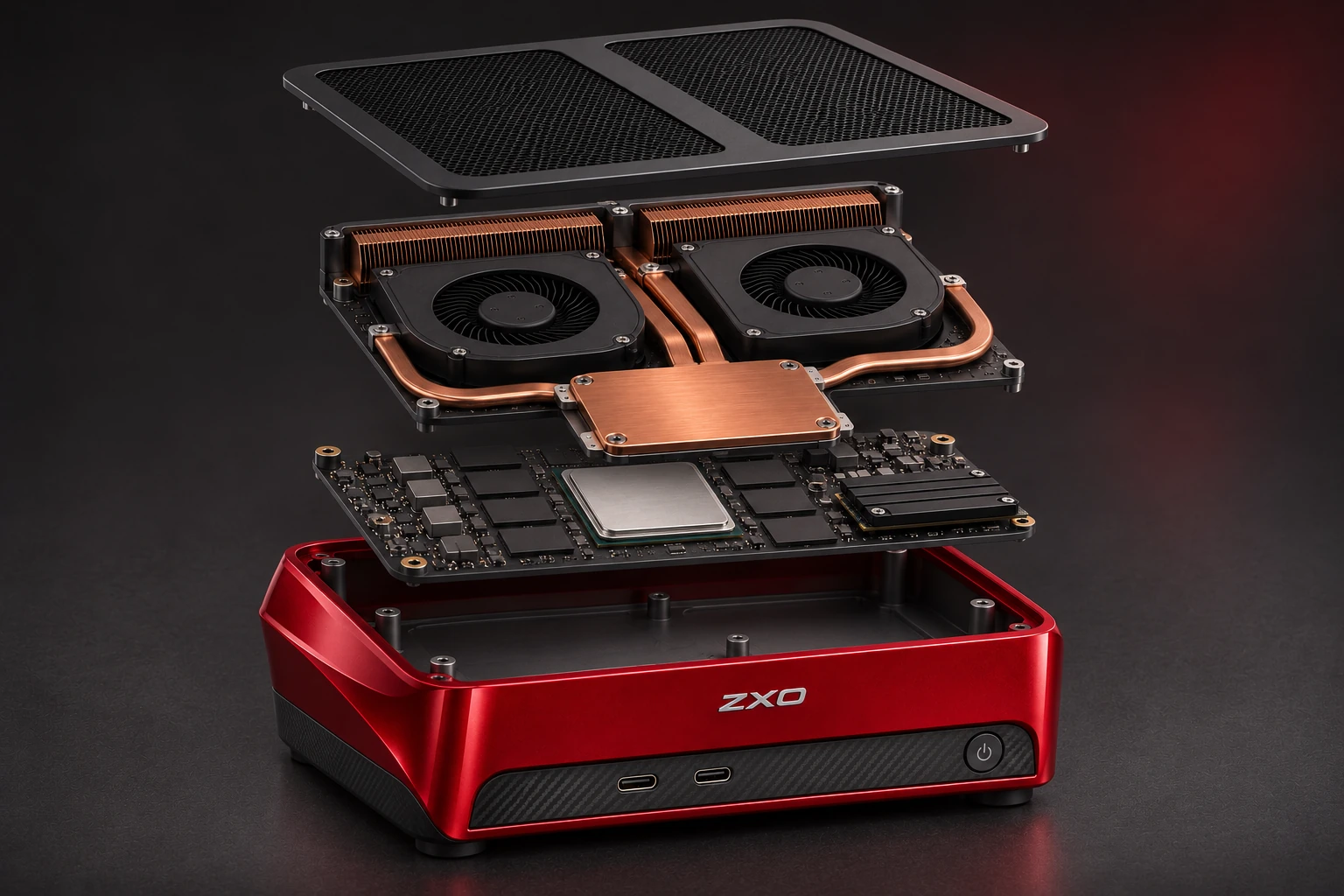
| Processor | AMD Ryzen AI Max+ 395 (Strix Halo), x86-64 APU. 16 Zen 5 cores and 32 threads. 3.0 GHz base, up to 5.1 GHz boost. 16 MB L2 and 64 MB L3 cache. | Develop around a single Ryzen AI Max+ 395 APU. The board layout, firmware and sustained power policy depend on the platform selected for the prototype. |
|---|
| Integrated graphics | Radeon 8060S with 40 RDNA 3.5 compute units, rated up to 2.9 GHz. | Use the APU's integrated graphics and shared memory for compatible display, graphics and local AI workloads. |
|---|
| AI accelerator | AMD XDNA 2 NPU, rated up to 50 TOPS. This is a processor specification for the NPU. | Confirm NPU acceleration for the selected models, runtime and Linux image. GPU inference and NPU acceleration use different software paths. |
|---|
| Memory | 128 GB LPDDR5x-8000 shared system memory. The APU uses a 256-bit memory interface with 256 GB/s theoretical bandwidth at this data rate. | Target 128 GB onboard memory. Reserve capacity for the OS, applications and the graphics memory allocation appropriate to the workload. |
|---|
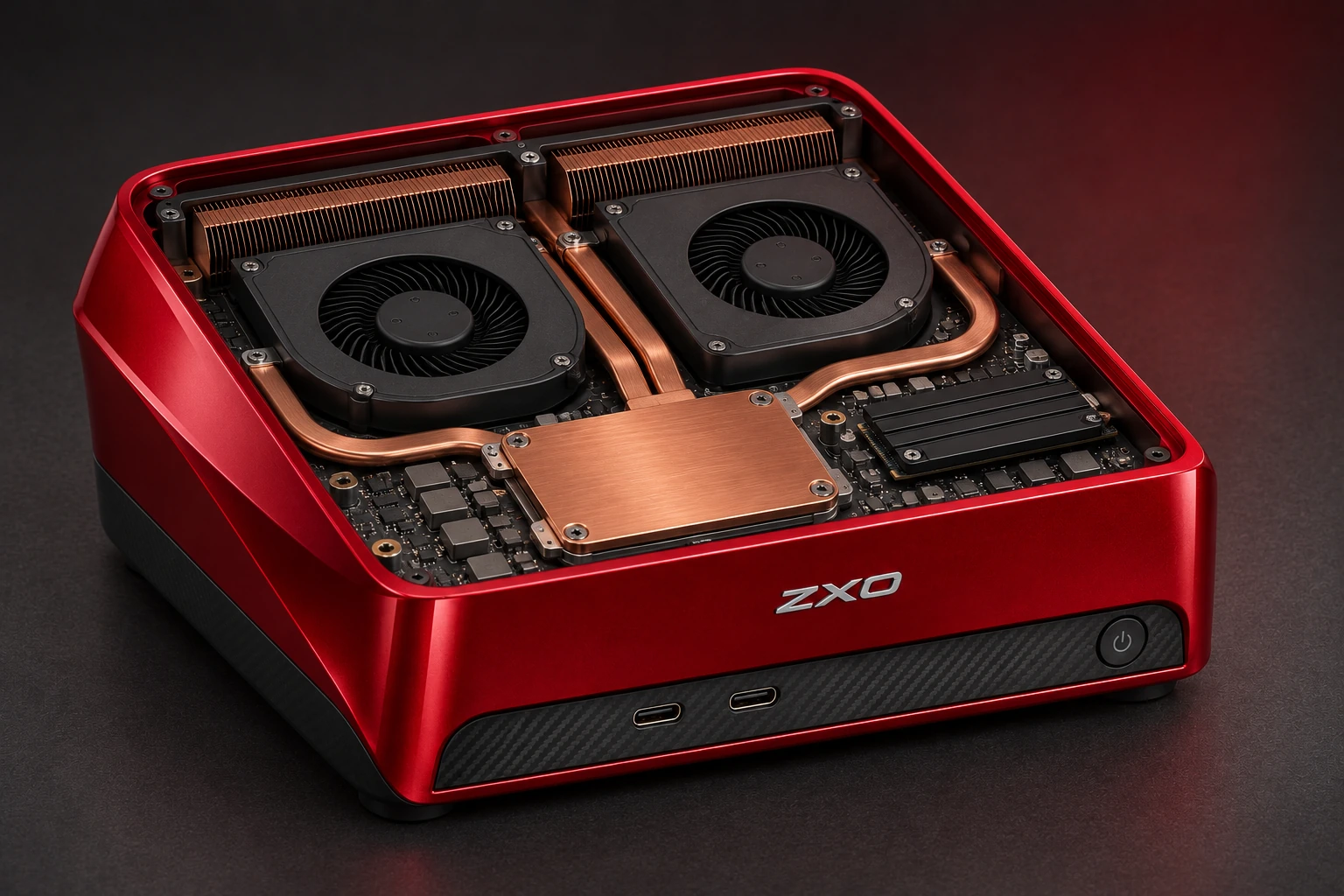
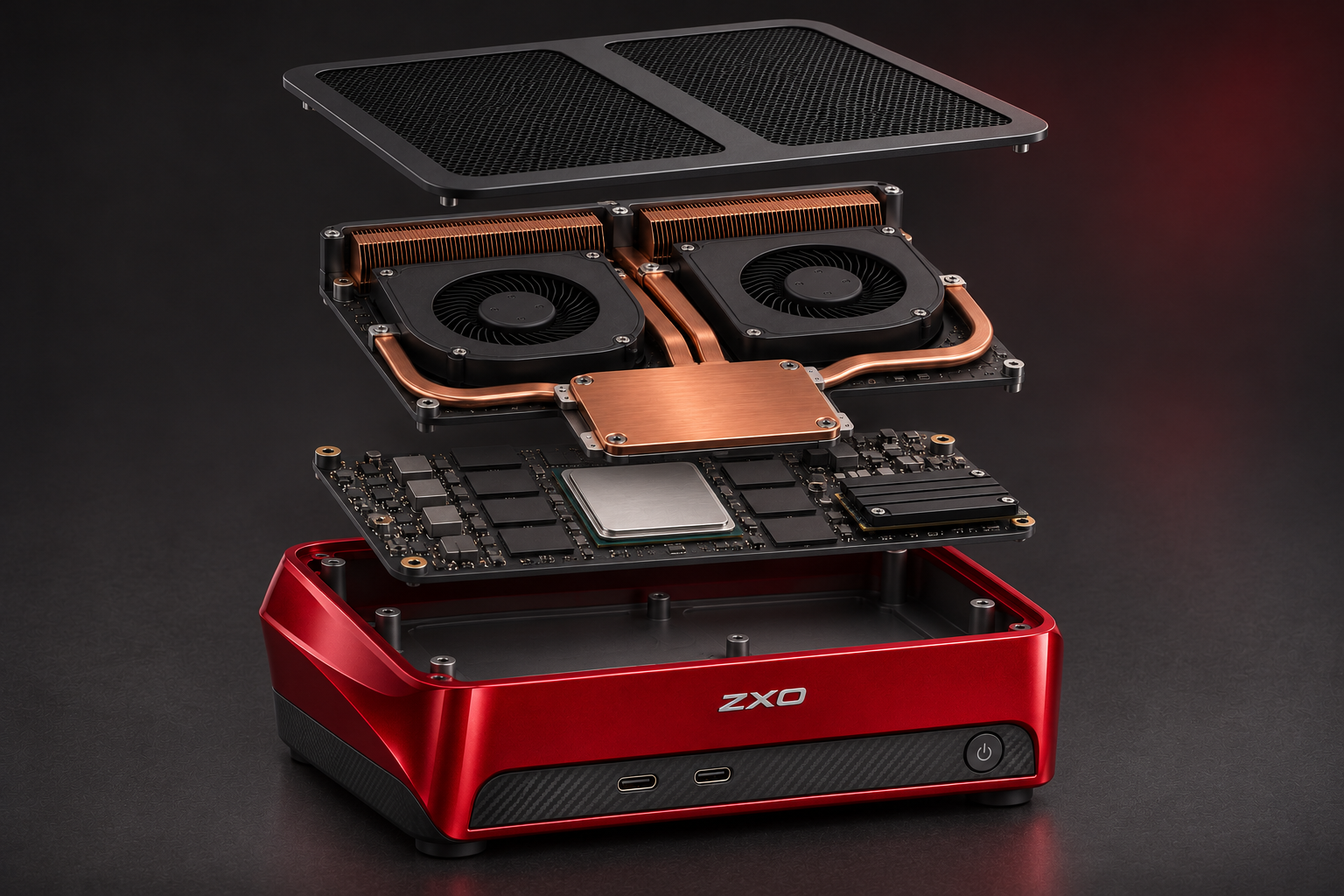
| Storage | 2 TB M.2 self-encrypting SSD in AMD's reference specification and 2 TB M.2 SSD in the Linux retail listing. | Use a 2 TB baseline and an SSD heat spreader. Verify slot dimensions, drive firmware and sustained drive temperature before finalizing the bill of materials. |
|---|
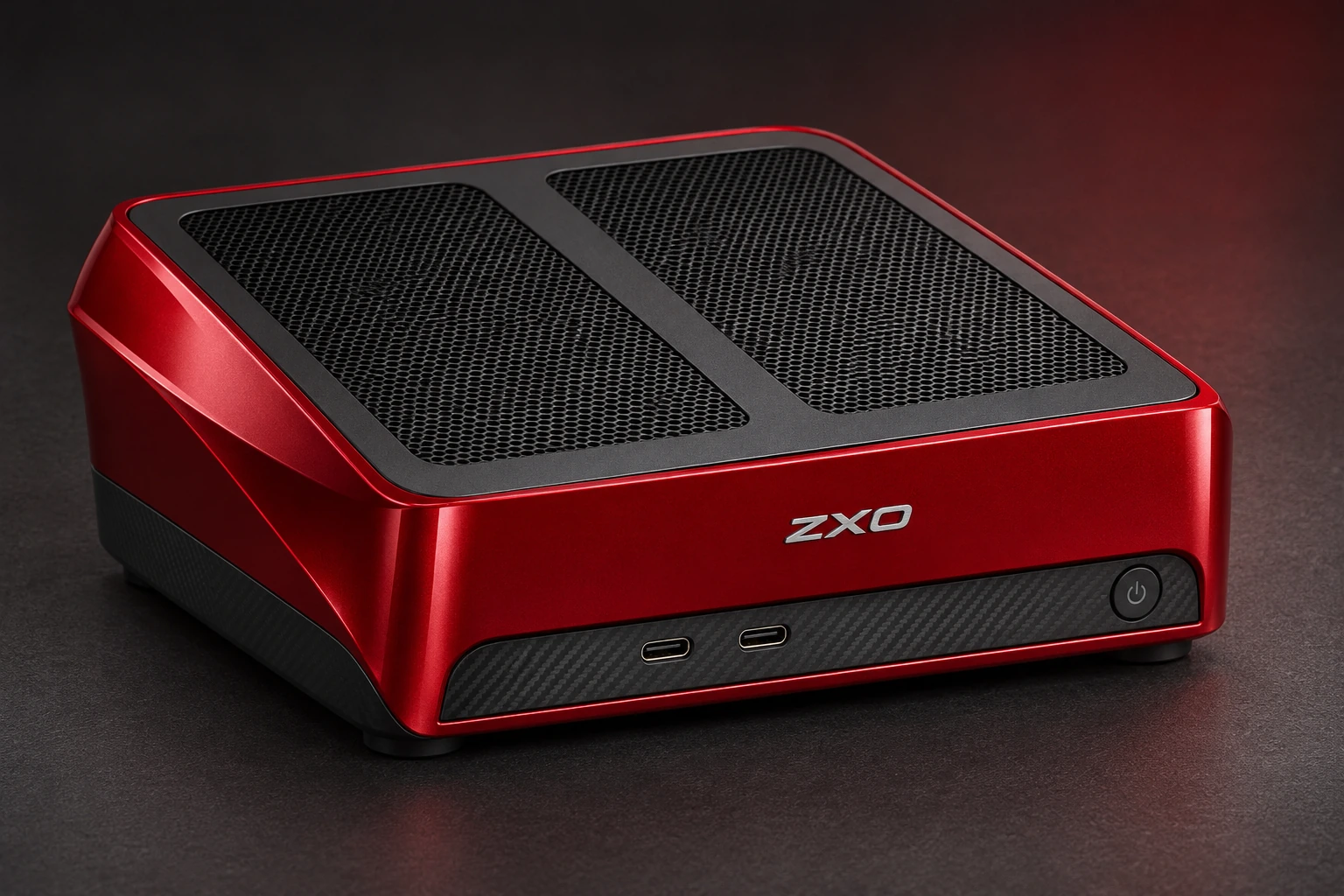
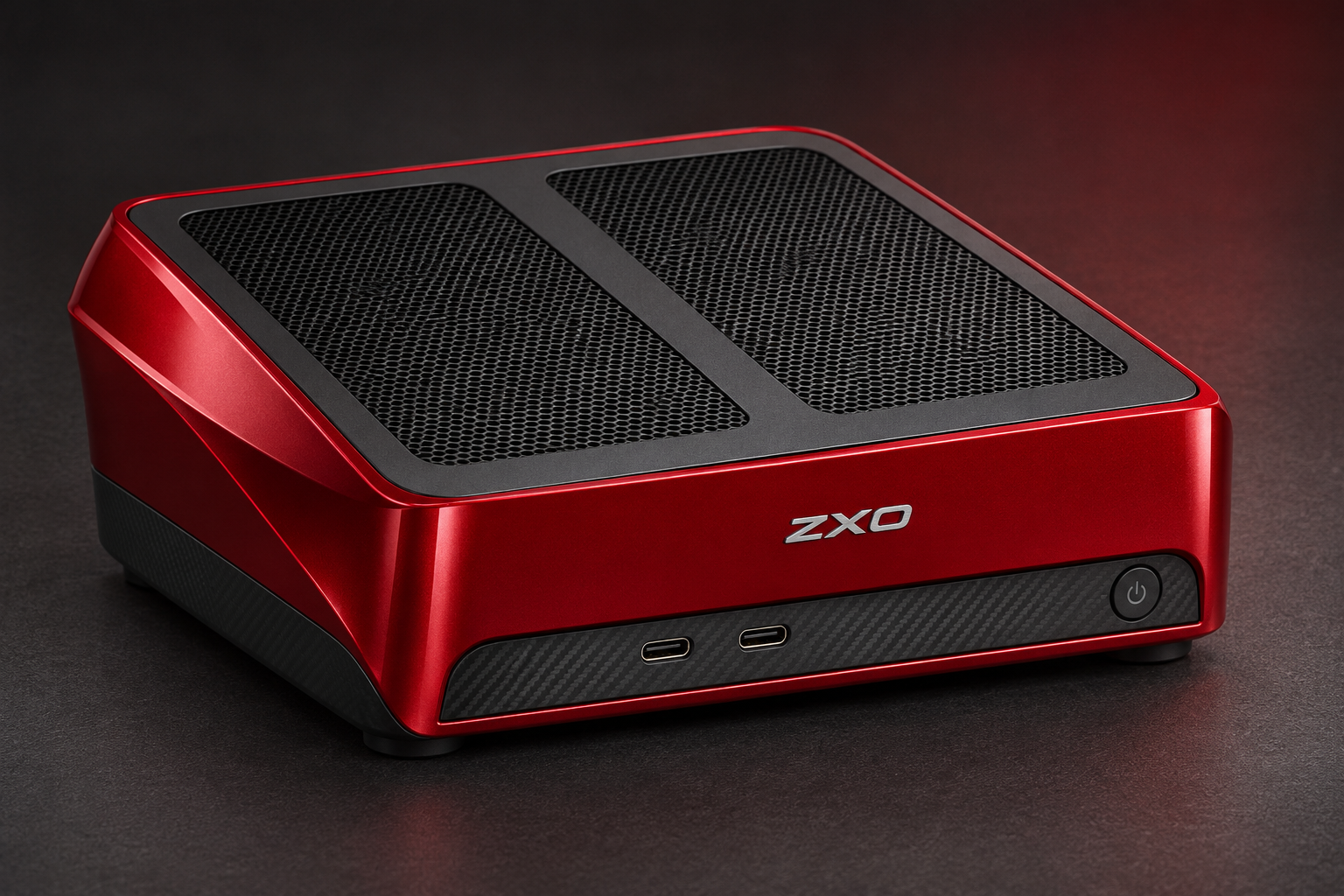
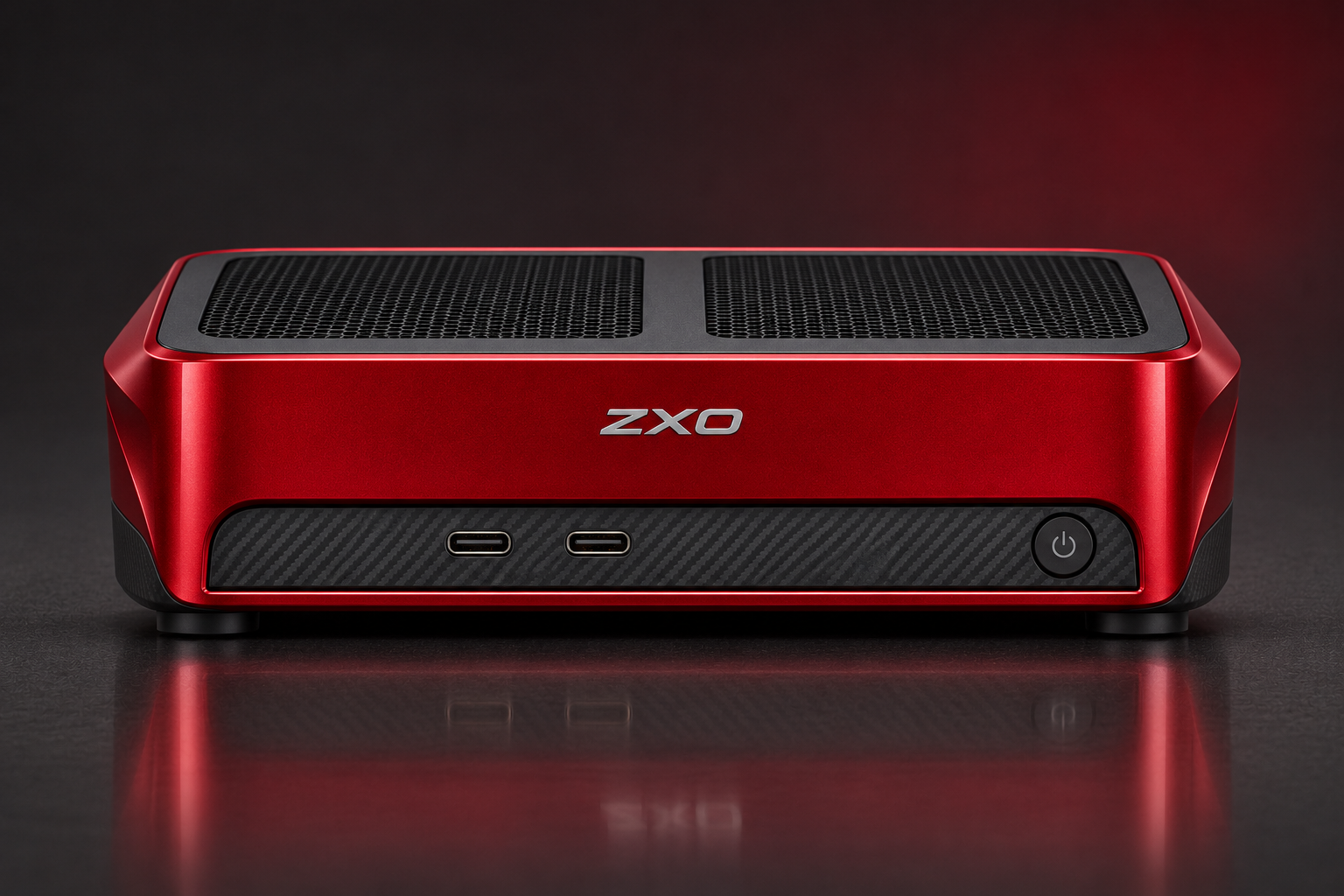
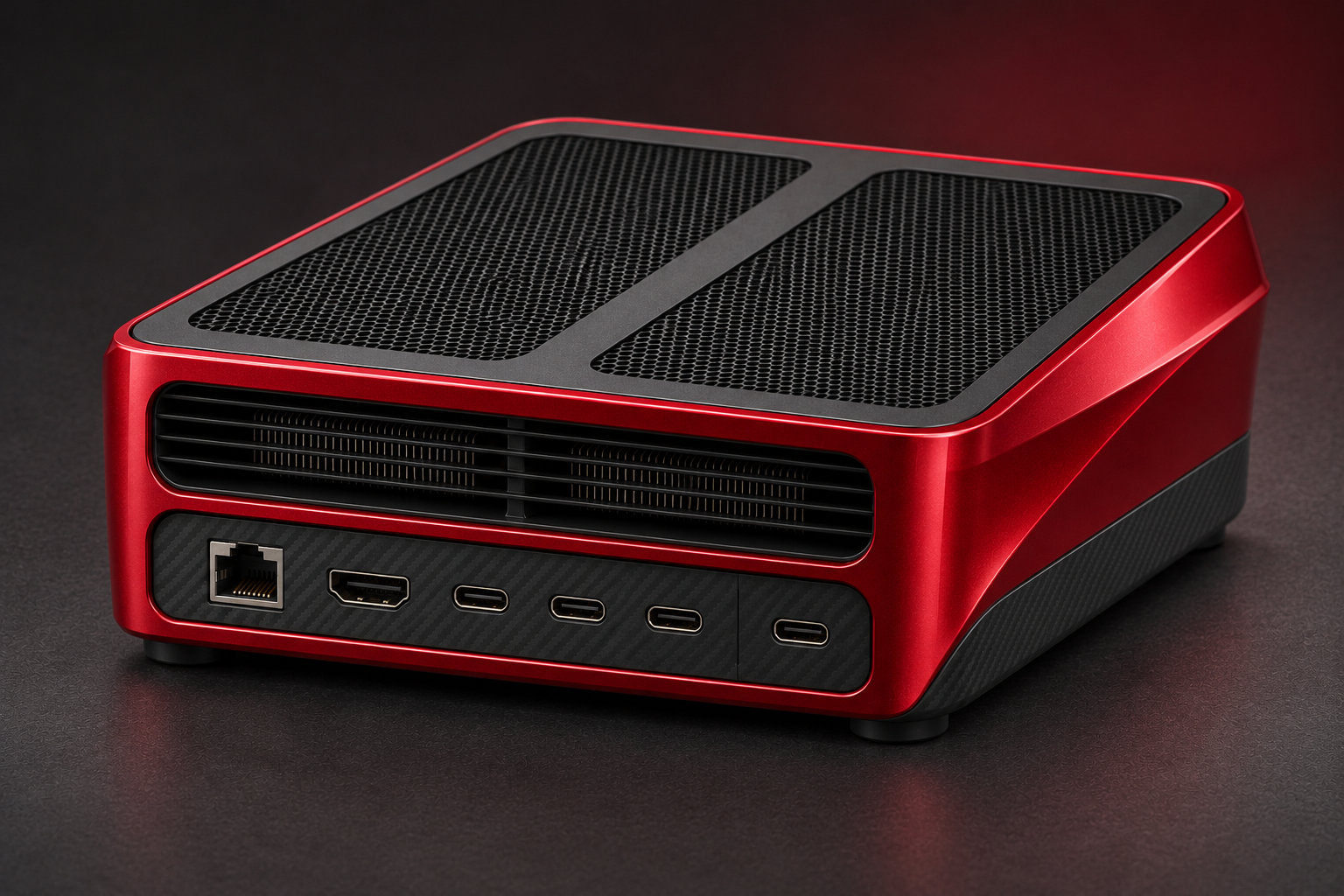
| USB and power input | Three rear USB-C 3.2 ports for supported data and display connections, plus a separate rear USB-C DC input dedicated to power. | The front USB-C openings and power button are proposed enclosure features. Final port count, routing, supported speeds and power input require board integration. |
|---|
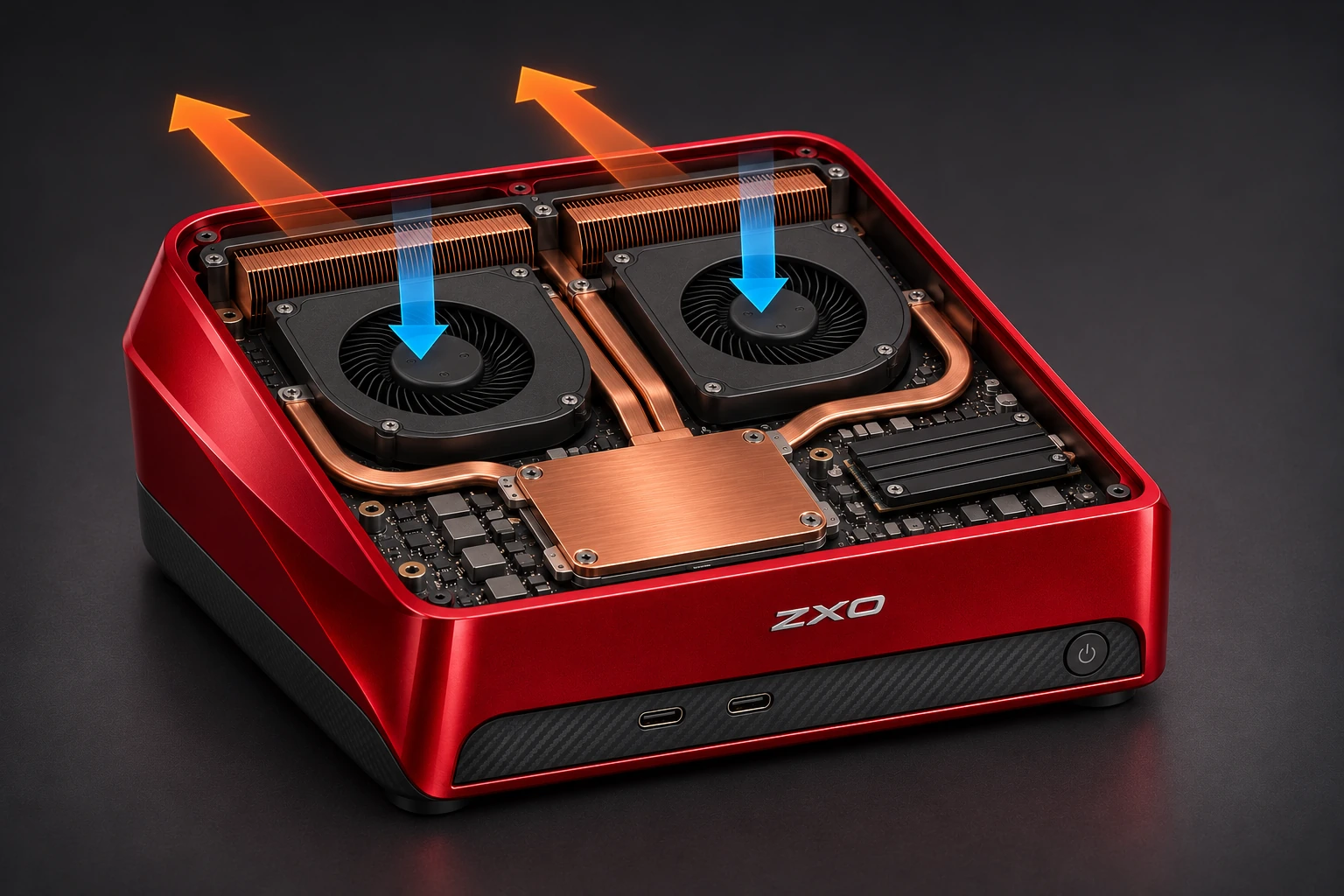
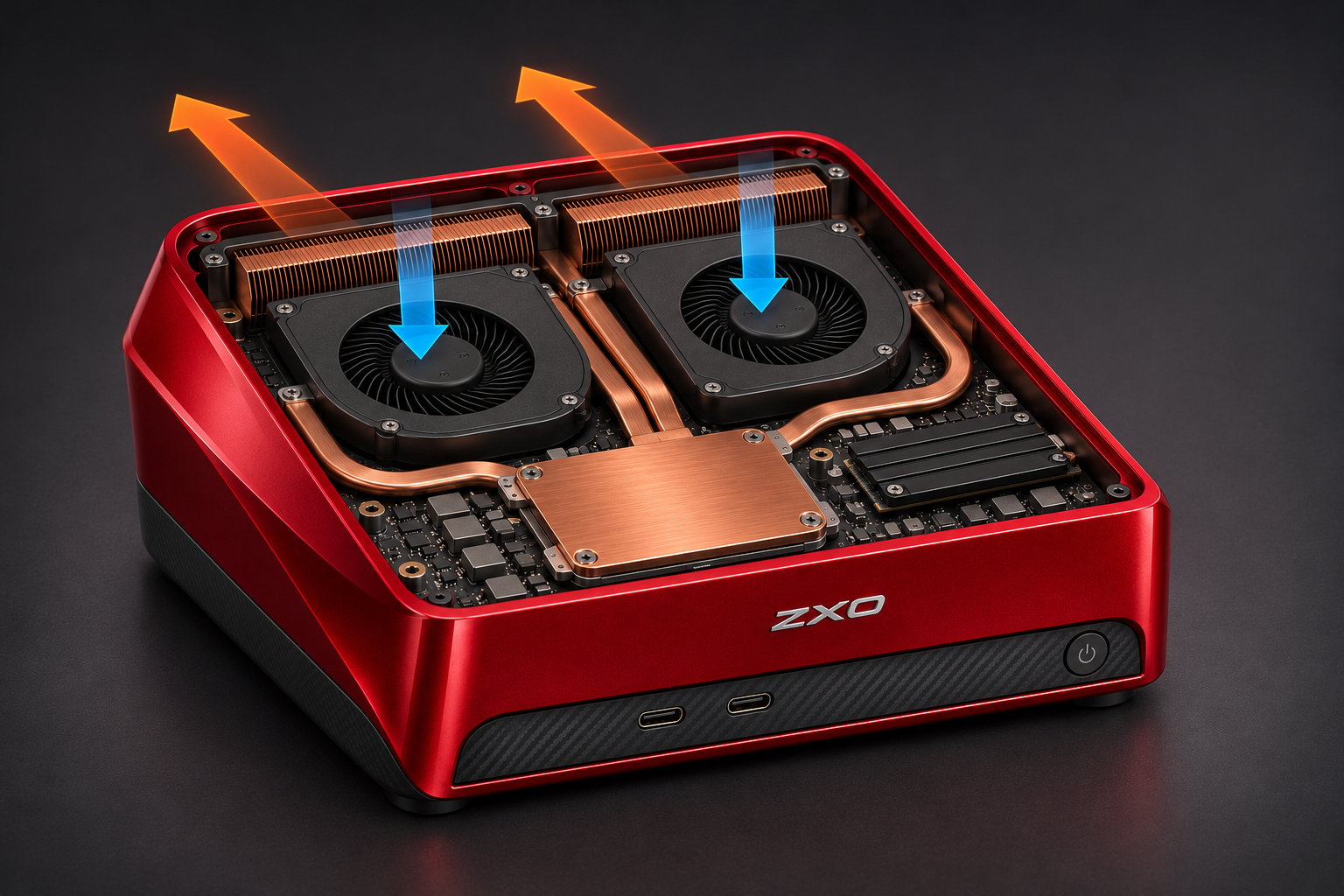
| Display and wired network | Rear HDMI 2.1b and 10 Gb/s RJ45 Ethernet. AMD documents USB-C display connections with compatible cables and displays. | Retain accessible rear display and network connections. Confirm the port map and keep cables below the rear exhaust path. |
|---|
| Wireless | Wi-Fi 7 and Bluetooth 5.4. | Validate the antenna placement and link quality in the proposed metal enclosure. |
|---|
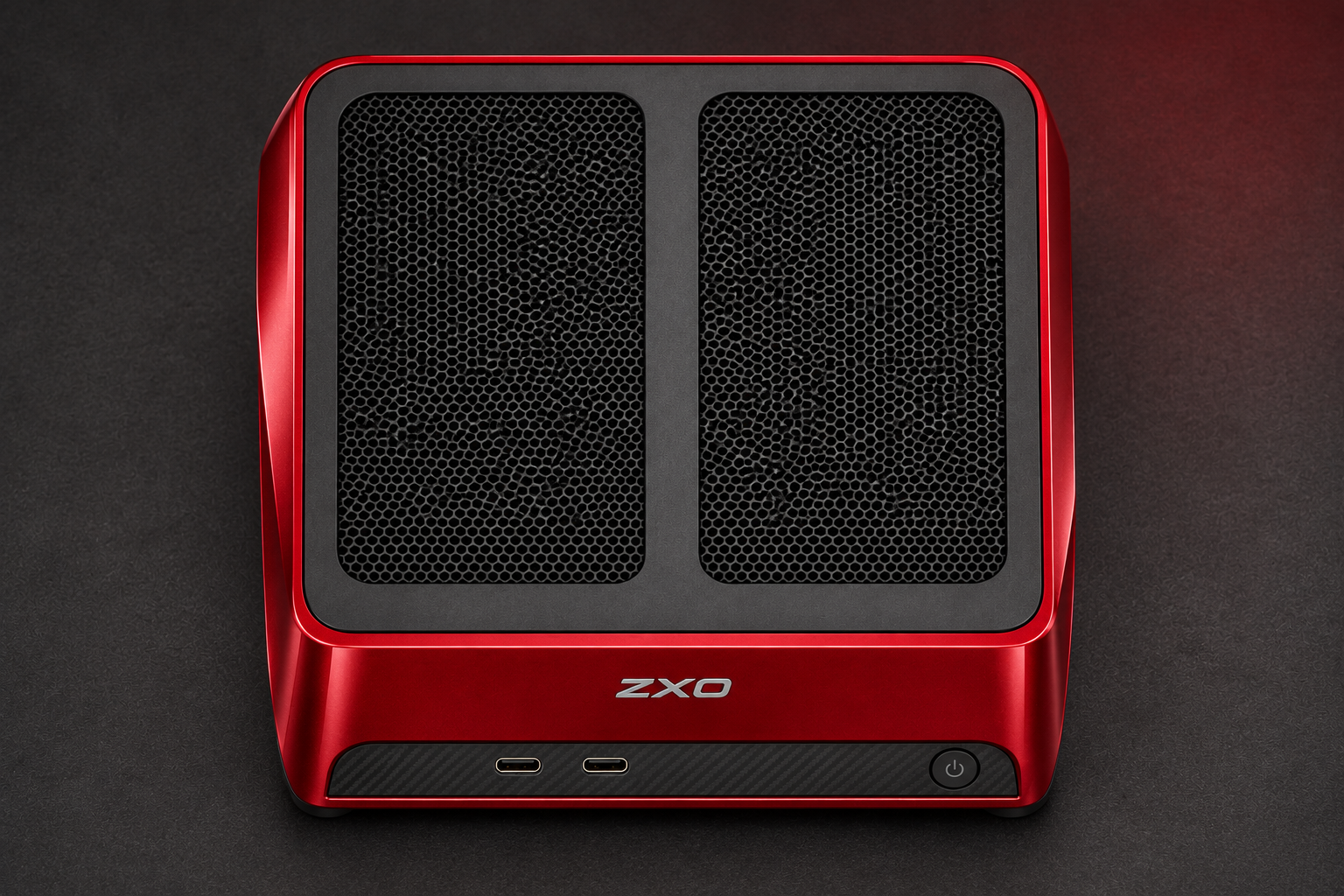
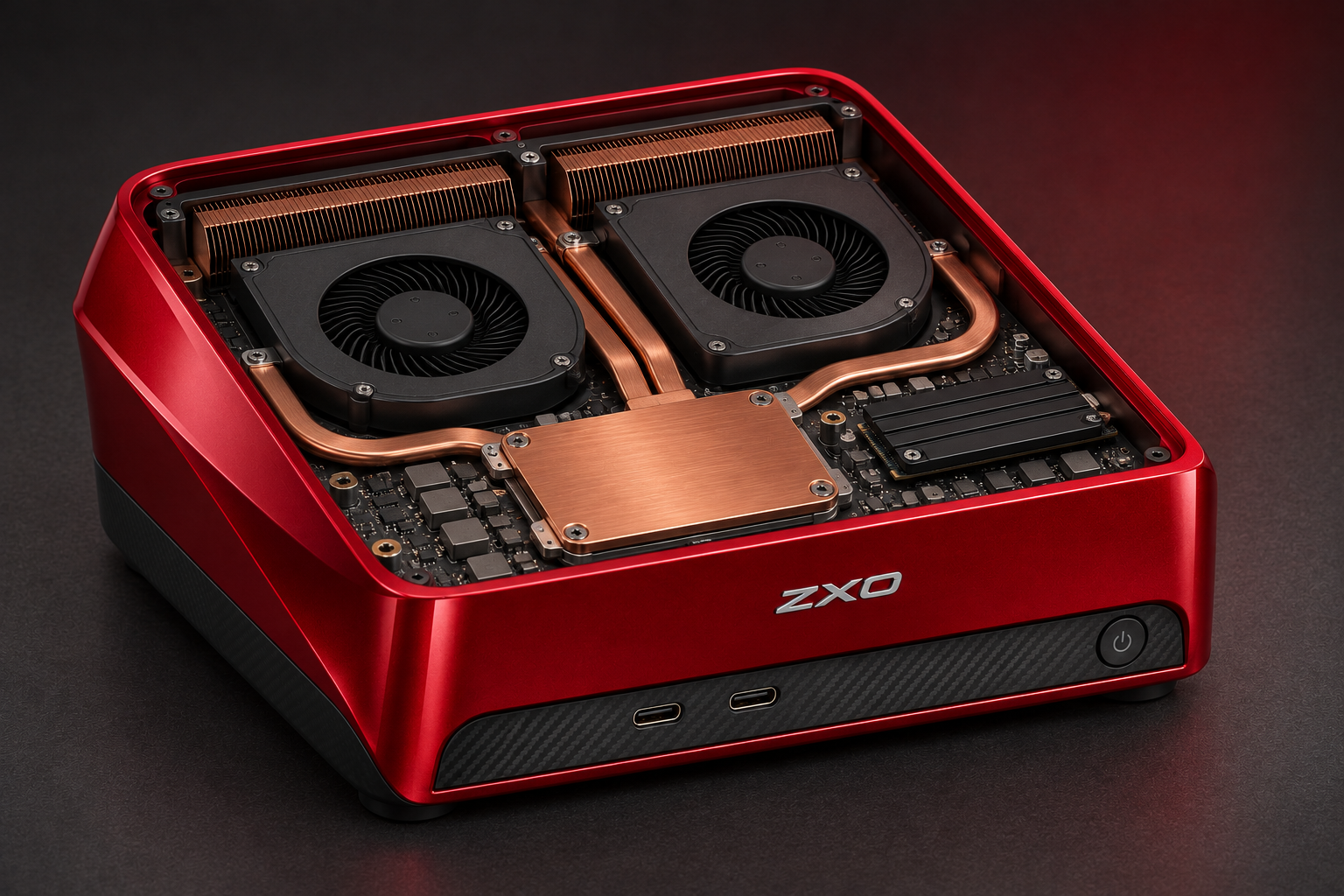
| Power and cooling | AMD lists a 120 W TDP for the reference system and supplies an external power adapter. The processor's separate specification lists 55 W default TDP and a 45–120 W configurable range. | Assess an external adapter and the twin-blower thermal module with the selected board. Measure wall input, sustained power, temperatures and acoustics on the prototype. |
|---|
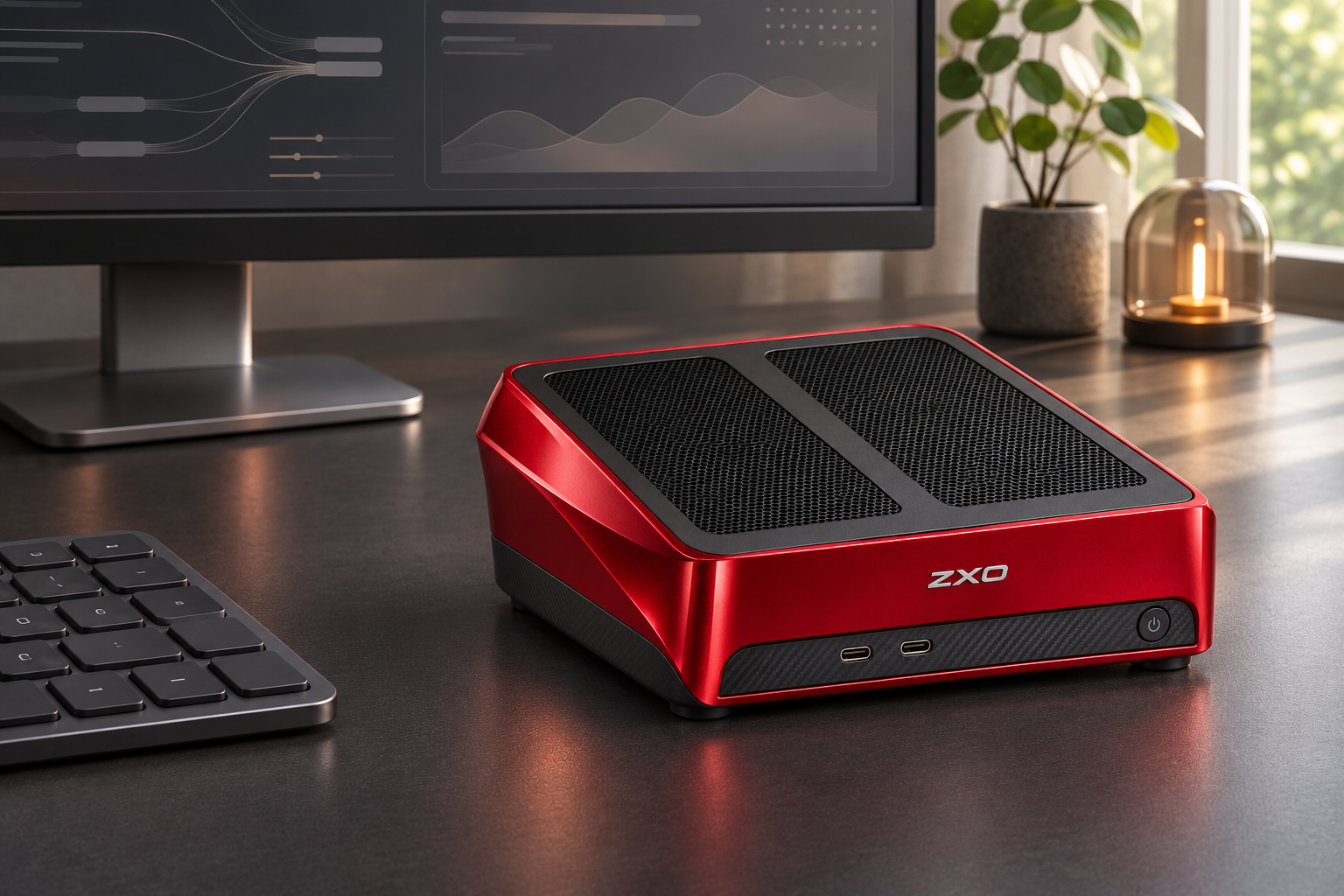
| Physical envelope | 150 × 150 × 45.4 mm. AMD lists a weight below 1.2 kg. | Low desktop enclosure with added height for the proposed cooling assembly. Final size, weight, materials and mounting details follow mechanical design. |
|---|
| Software | Linux on the linked retail unit. AMD documents Ryzen AI Developer Center, ROCm and Linux workflows for local inference and image generation. | Validate the Linux image, firmware, GPU and NPU drivers and target applications on the chosen board. Confirm compatible framework and backend versions per workload. |
|---|