48U MGX / DC busbar
Four 10U DGX B300 nodes with DC busbar power distribution and an active rear-door heat exchanger.
 B300 / SERVER DESIGN
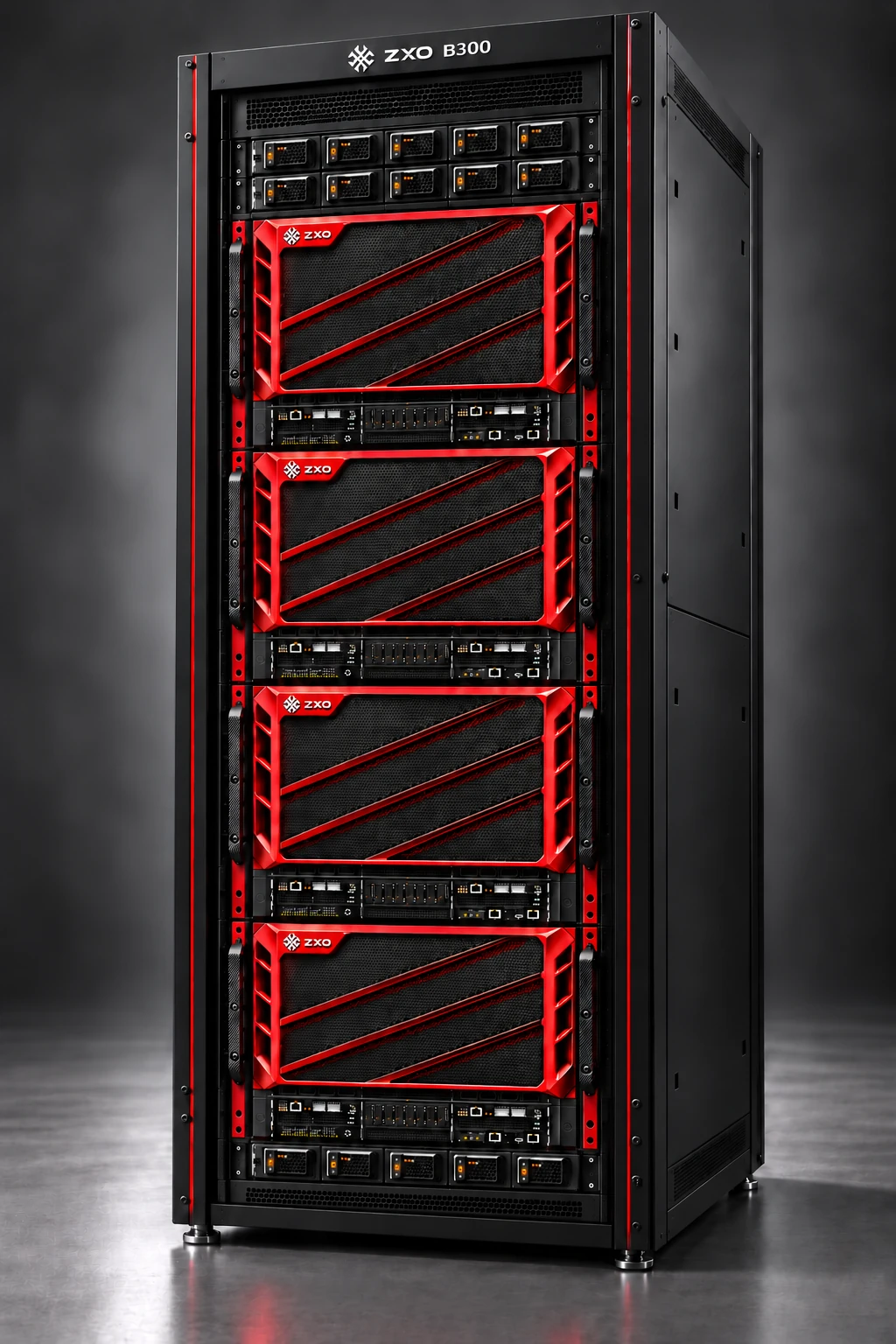
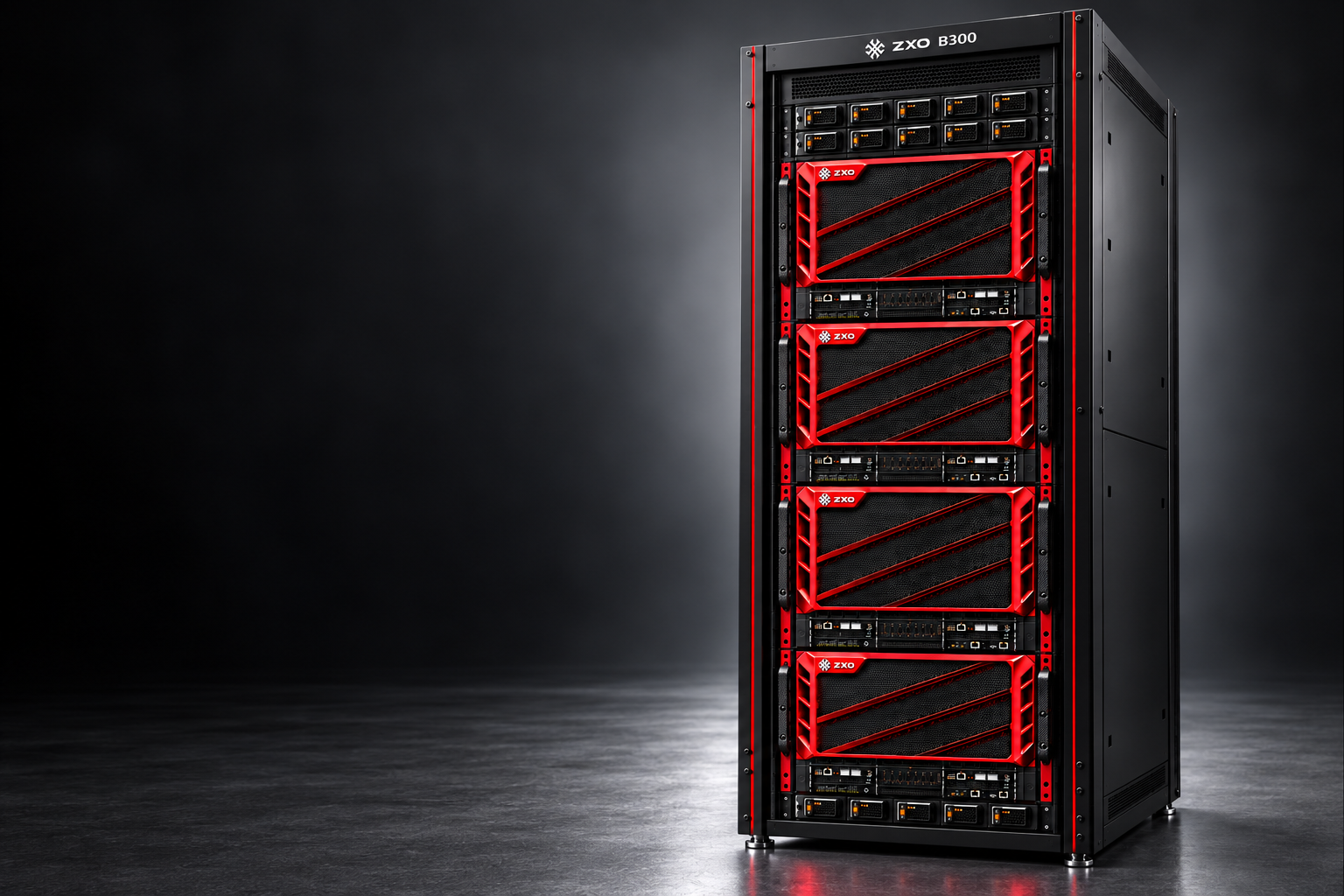
ZXO B300 / RACK EXTERIOR CONCEPT
Four systems.
One unmistakable presence.
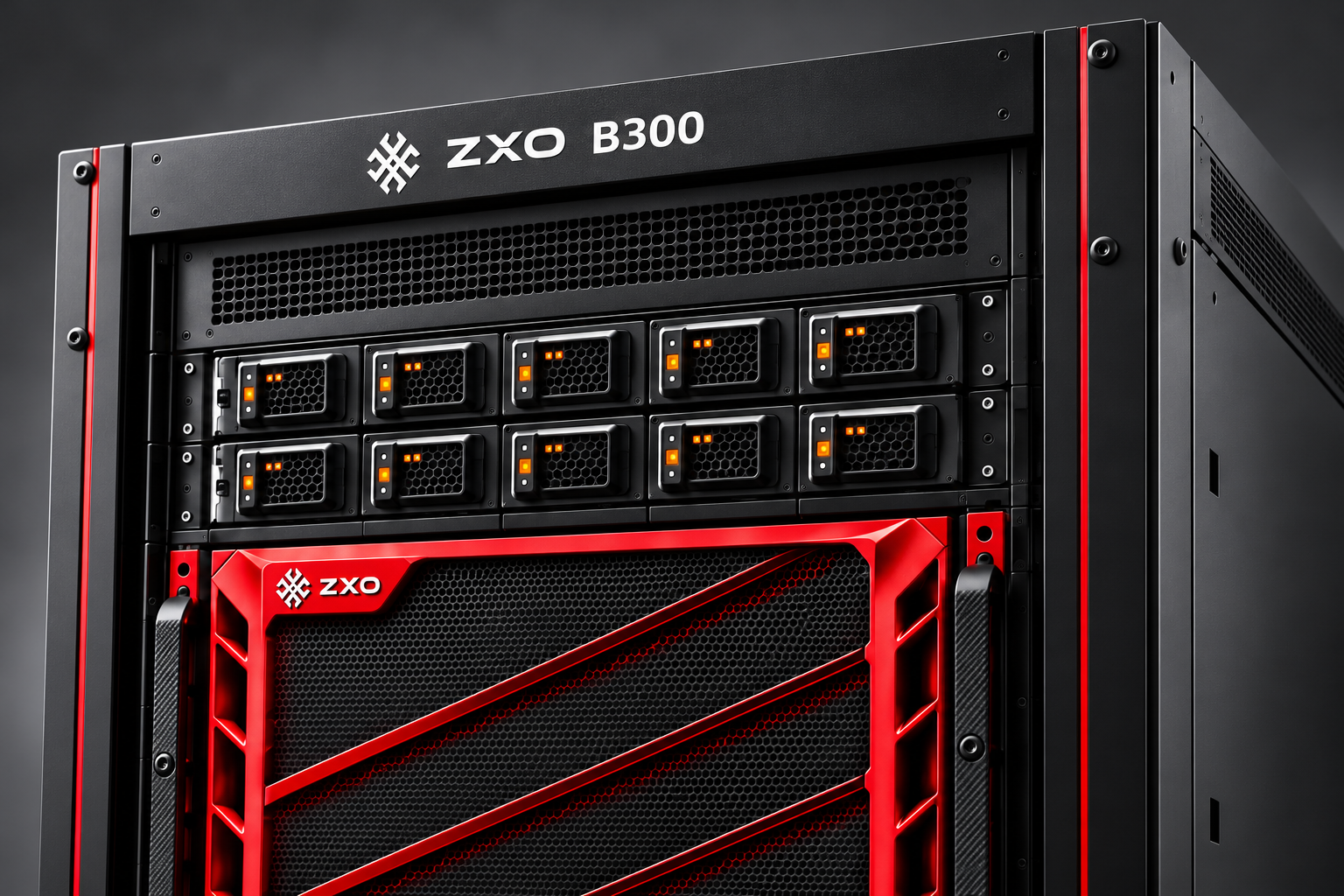
The red diagonal grille. The graphite frame. The ZXO signature, brought together in a high-density rack design study.
Explore all 12 views View the high-end reference configurationHIGH-END DGX B300
PLANNING REFERENCE
01 / FROM NODE TO RACK
The B300 high-density rack carries the ROSSO design language across four server fronts within one graphite cabinet.
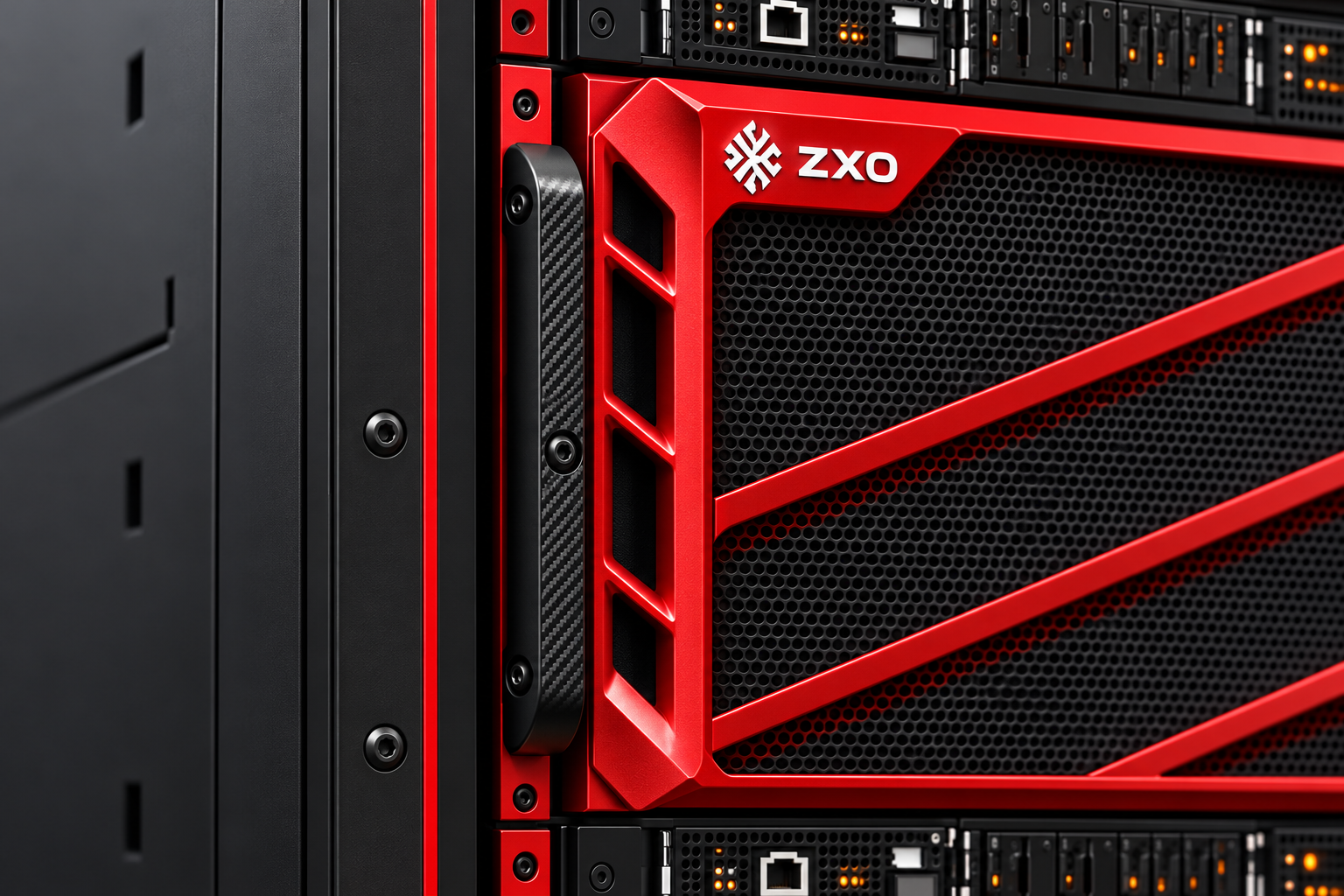
The faceted red surrounds and diagonal mesh create a repeatable rhythm. Dark service areas separate each system, while slender red accents connect the full-height frame.
Look closer at the detailsRed diagonal ribs over dark honeycomb mesh.
A restrained graphite cabinet with red perimeter accents.
ZXO identity repeated across the four-system composition.
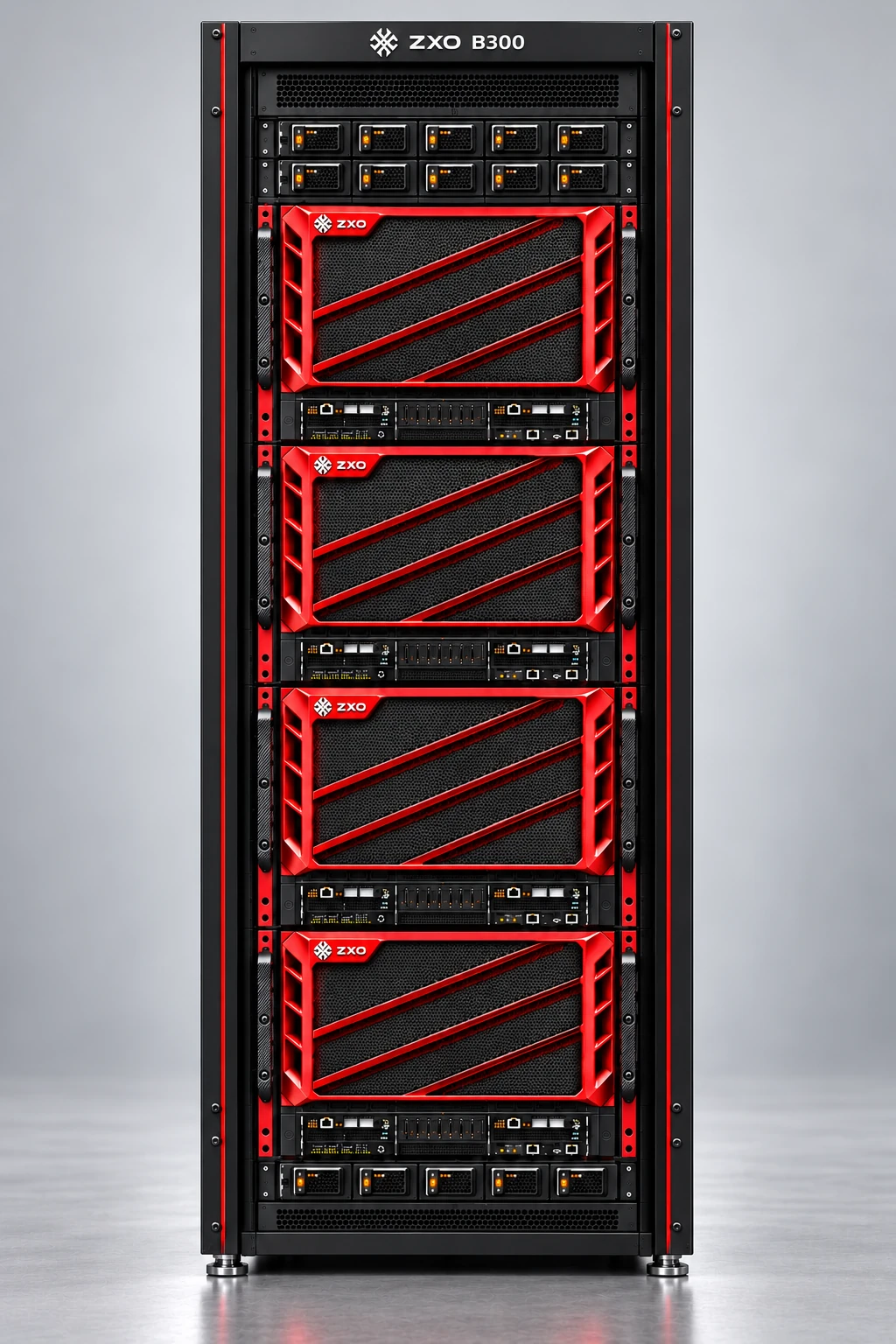
02 / FORM & SURFACE
The rack finds its character in the relationship between each server front and the structure around it.
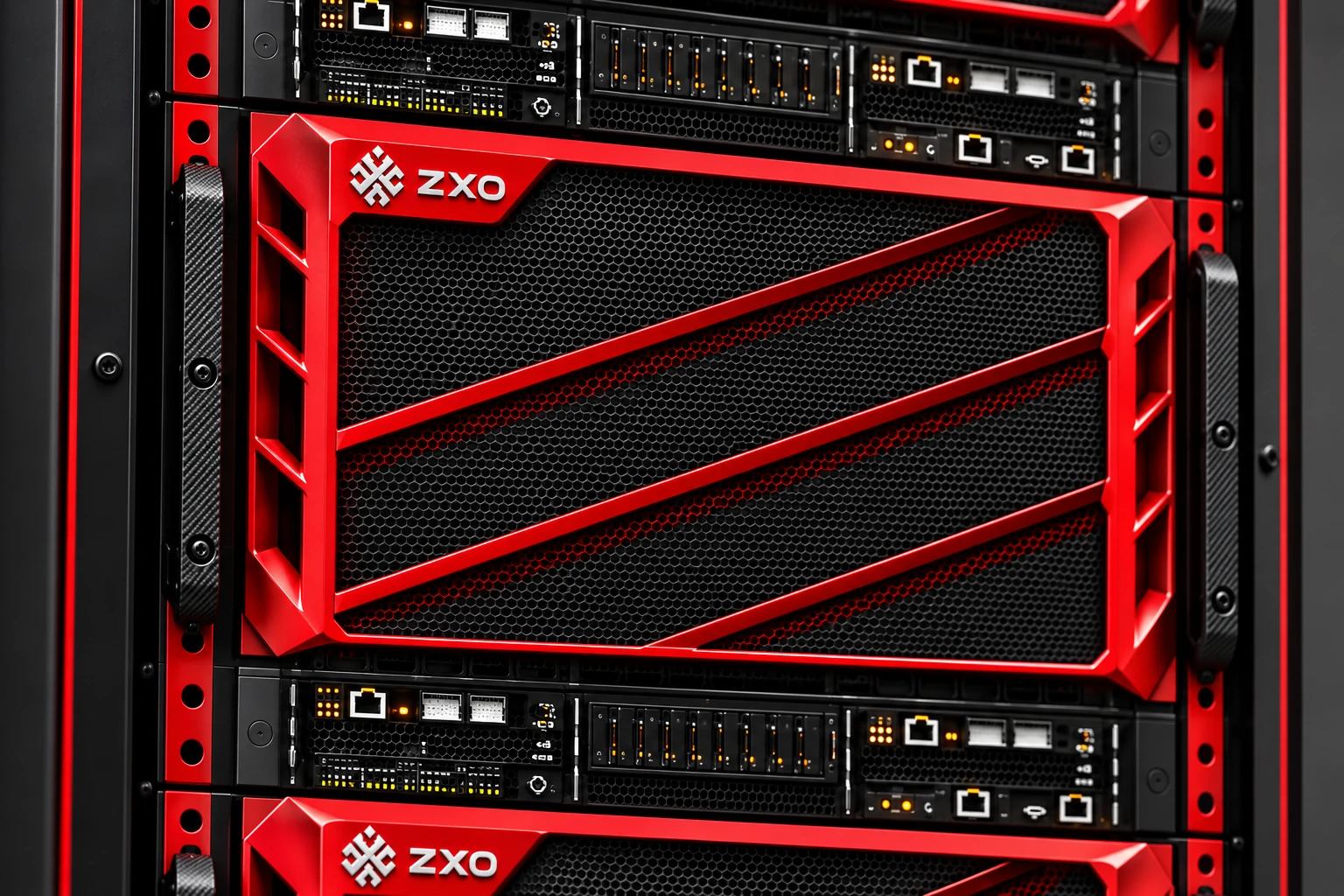
Red metal edges, black mesh and a distinct service band give each server its own place within the cabinet.
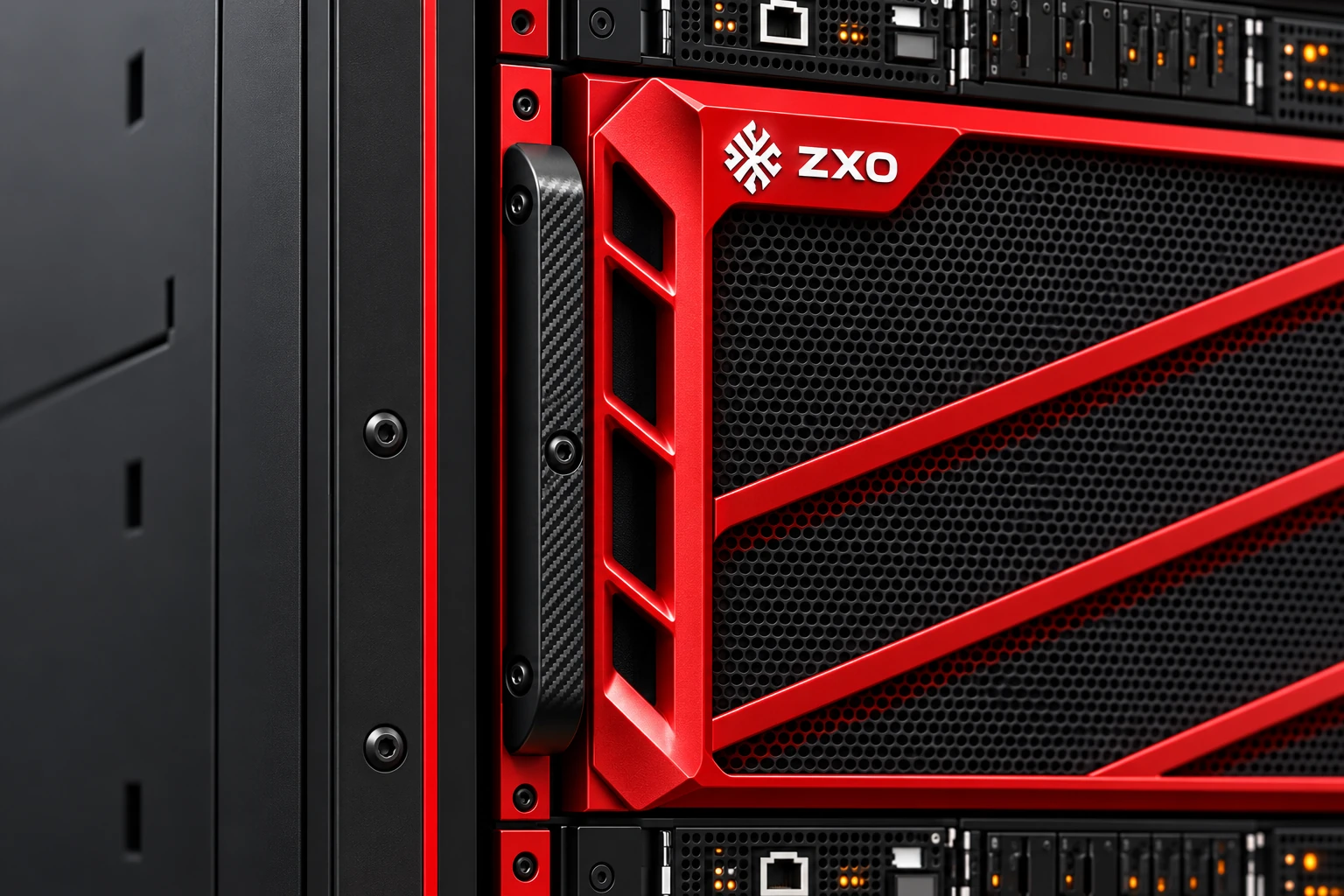
The graphite structure provides a calm boundary for the repeating red fronts, with small accents defining the full-height silhouette.
03 / THE PLANNING BRIEF
This study explores the exterior of a four-system B300-class deployment. The packaging brief connects the visual direction to the wider infrastructure conversation.
The front composition keeps four server faces legible within one cabinet. Side and rear views explore the surrounding enclosure and proposed cooling zone.
View the B300 server studyThe 32-GPU figure is a planning target based on four eight-GPU nodes, not a measured or confirmed ZXO rack configuration. Power and cooling capacity are defined during system and site engineering.
FOUR-NODE RACK / HIGH-END REFERENCE
A four-node planning reference based on NVIDIA DGX B300 hardware and its highest listed system-memory option. It provides a configuration brief for the ZXO rack exterior study.
Planning reference · Engineering validation pending
| Component | Per DGX B300 node | Four-node rack total |
|---|---|---|
| GPU platform | 8 × NVIDIA B300 Blackwell Ultra GPUs | 32 × NVIDIA B300 Blackwell Ultra GPUs |
| Nominal GPU-memory capacity¹ | 2,304 GB HBM3e (8 × 288 GB) | 9,216 GB HBM3e (32 × 288 GB) |
| Host CPUs | 2 × Intel Xeon Platinum 6776P | 8 × Intel Xeon Platinum 6776P |
| Physical CPU cores | 128 cores (2 × 64) | 512 cores (8 × 64) |
| System-memory upper option | Up to 4 TB per node; 2 TB default | Up to 16 TB aggregate across four nodes |
| Boot storage | 2 × 1.92 TB M.2 NVMe / 3.84 TB raw | 8 × 1.92 TB M.2 NVMe / 15.36 TB raw |
| Local data / cache storage | 8 × 3.84 TB E1.S NVMe | 32 × 3.84 TB E1.S NVMe |
| Raw data / cache capacity² | 30.72 TB | 122.88 TB |
| Compute-network adapters | 8 × NVIDIA ConnectX-8; up to 800 Gb/s each | 32 × NVIDIA ConnectX-8; up to 800 Gb/s each |
| Storage / management DPUs | 2 × dual-port NVIDIA BlueField-3; 400 Gb/s class | 8 × dual-port NVIDIA BlueField-3; 400 Gb/s class |
| NVLink switching | 2 × NVIDIA NVSwitch | 8 × NVIDIA NVSwitch across four nodes |
| GPU interconnect domains | One eight-GPU NVLink domain | Four separate eight-GPU NVLink domains |
| Node-to-node network | InfiniBand / Ethernet compute fabric | InfiniBand / Ethernet between the four nodes |
| Reference node envelope | 10U | Four 10U nodes within a 48U MGX rack |
Four 10U DGX B300 nodes with DC busbar power distribution and an active rear-door heat exchanger.
Four-node DC deployment estimates from NVIDIA’s data-center guide. These are planning values; they are not measurements of the ZXO concept or a benchmark of the maximum-memory option.
¹ GPU capacity follows the hardware guide’s nominal 288 GB per GPU listing. NVIDIA’s DGX B300 product page separately lists 2.1 TB total GPU memory; confirm delivered capacity and the reporting basis with the supplier.
GPU and CPU-memory figures are sums across devices and nodes, and do not establish one unified memory pool. ² Raw NVMe capacities exclude RAID, filesystem and usable-capacity overhead. Data/cache capacity and boot capacity are listed separately.
The ZXO exterior remains a concept. Final components, rack fit and system integration require engineering validation before a delivery specification can be confirmed.
Reference sources: NVIDIA DGX B300 hardware guide ↗ · NVIDIA product specifications ↗ · NVIDIA data-center deployment guide ↗ · Intel Xeon 6776P specifications ↗
Discuss this rack reference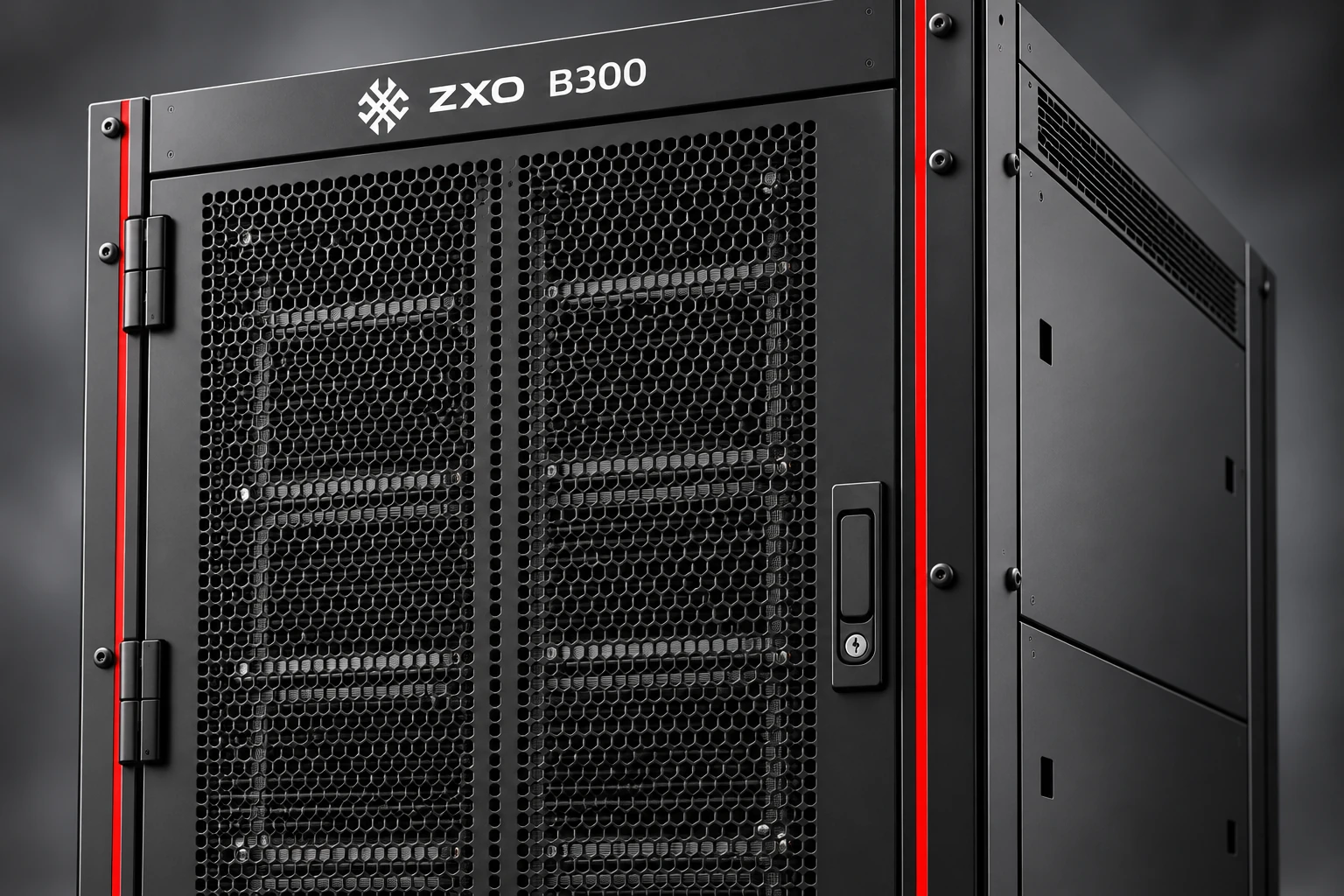
04 / BEYOND THE FRONT
A rack-scale project also starts with service access, airflow, power distribution and the installation environment. The rear and side studies give these areas a place within the design conversation.
Discuss your installation05 / THE COMPLETE VISUAL STUDY
Explore the cabinet from every side, move into the material details, then see the design in wider settings. Select an image to enlarge it or open the original PNG.
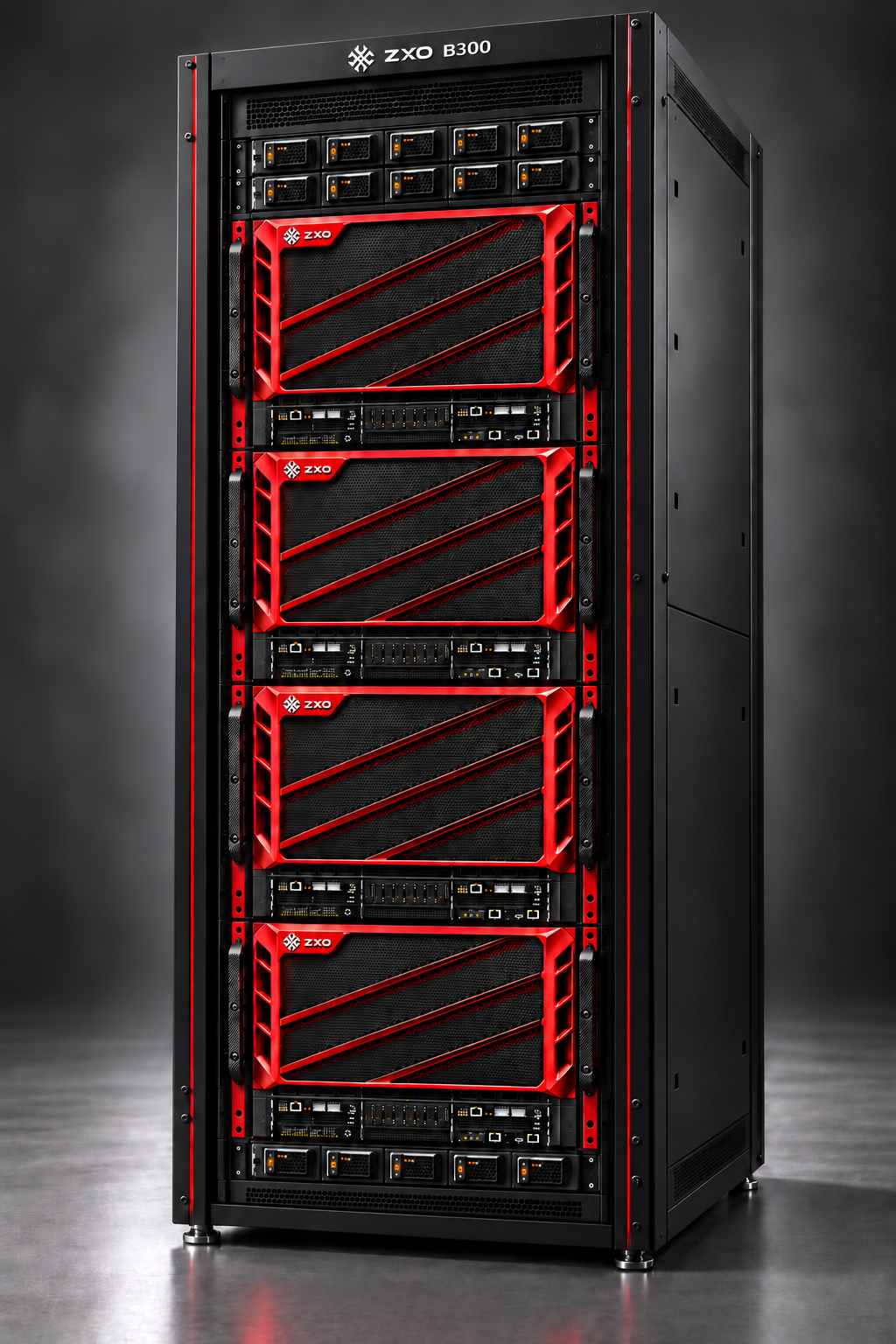
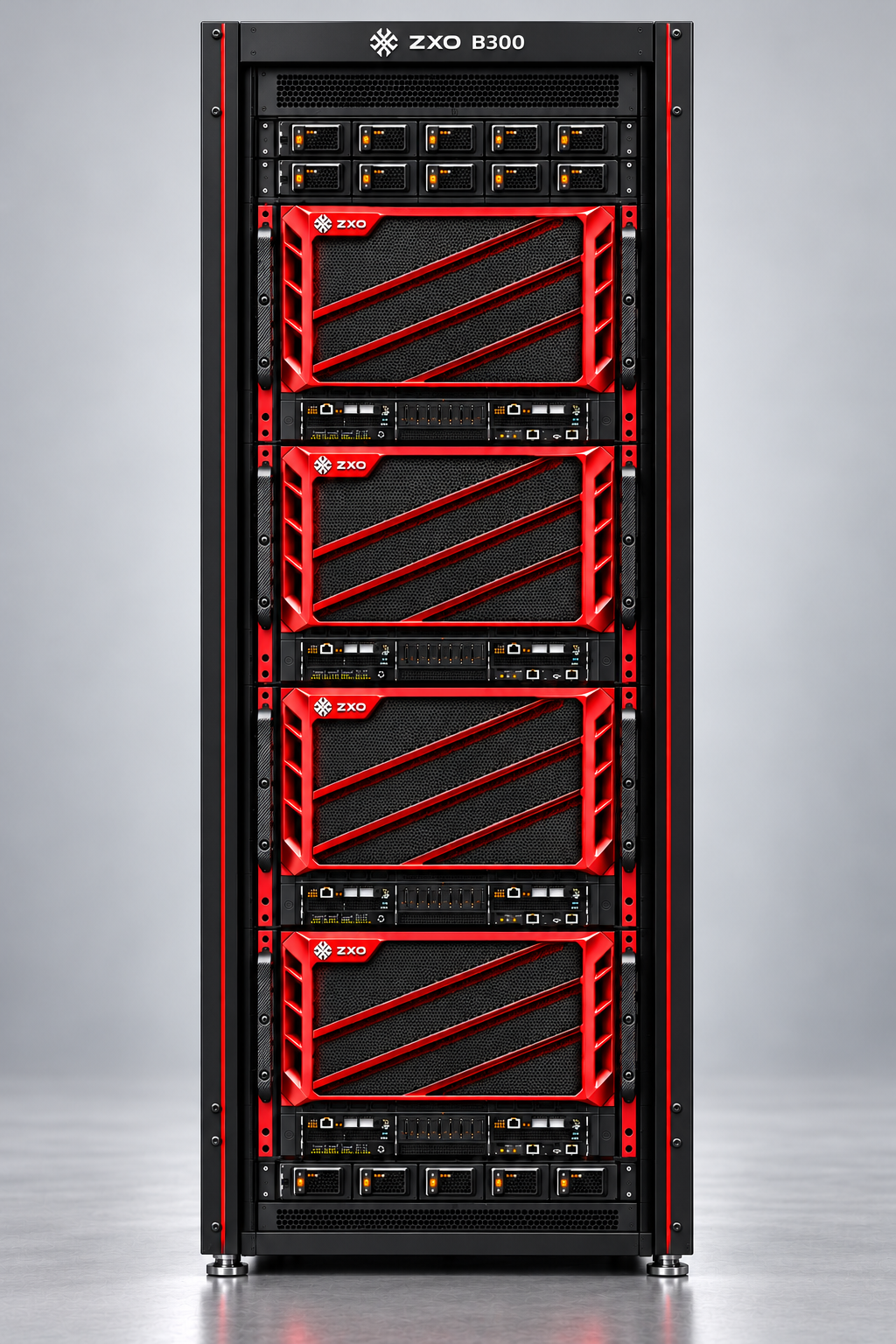
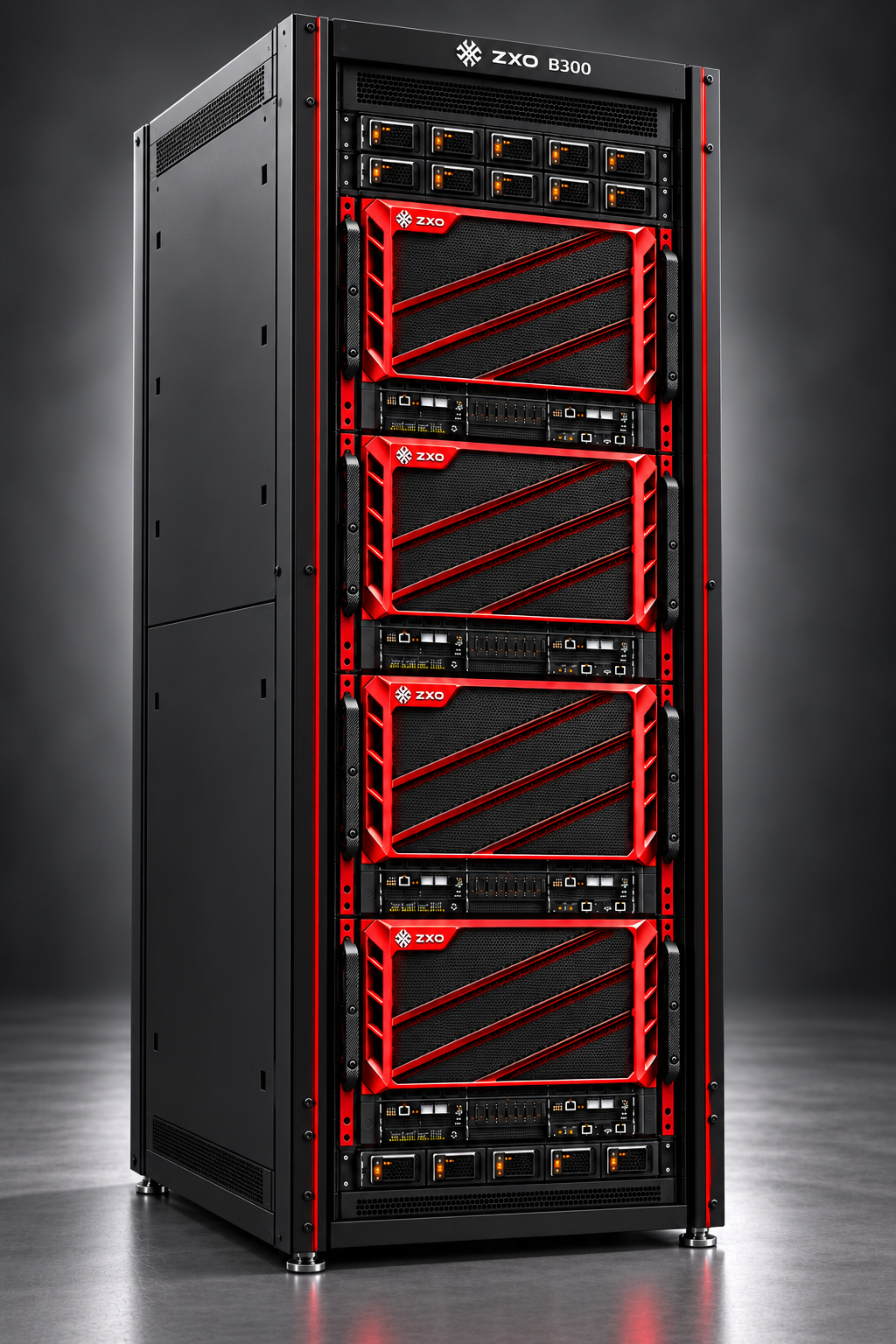
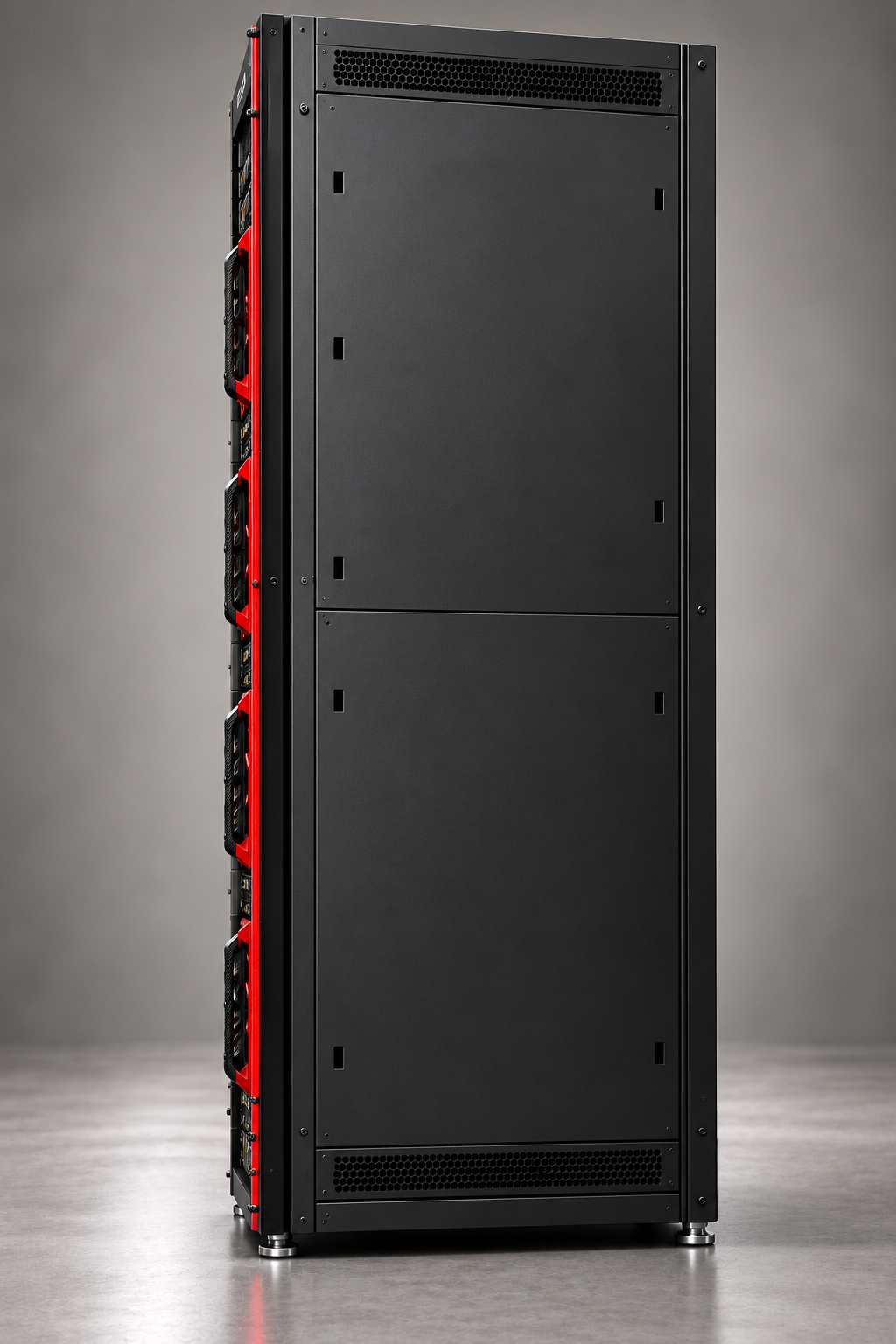
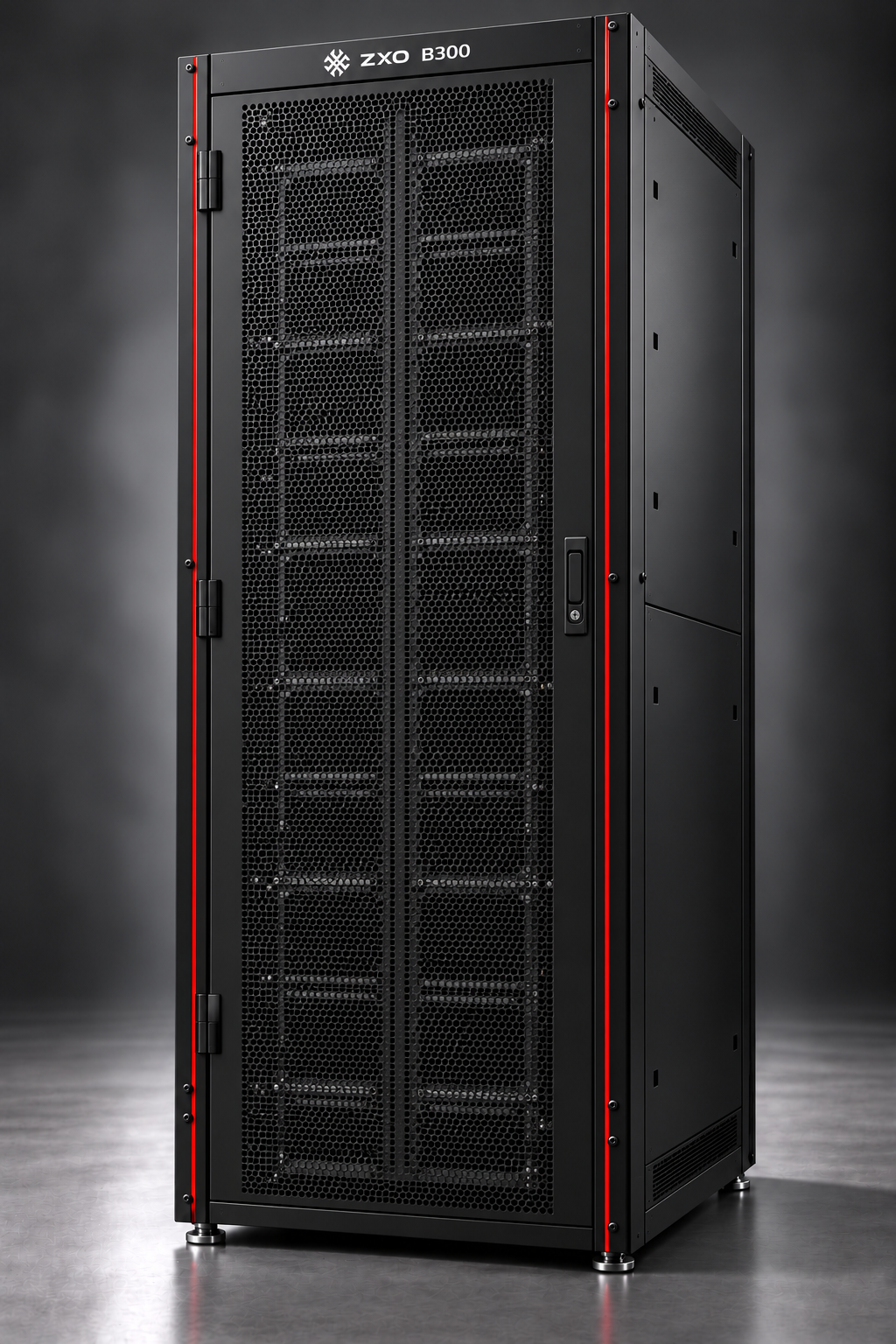
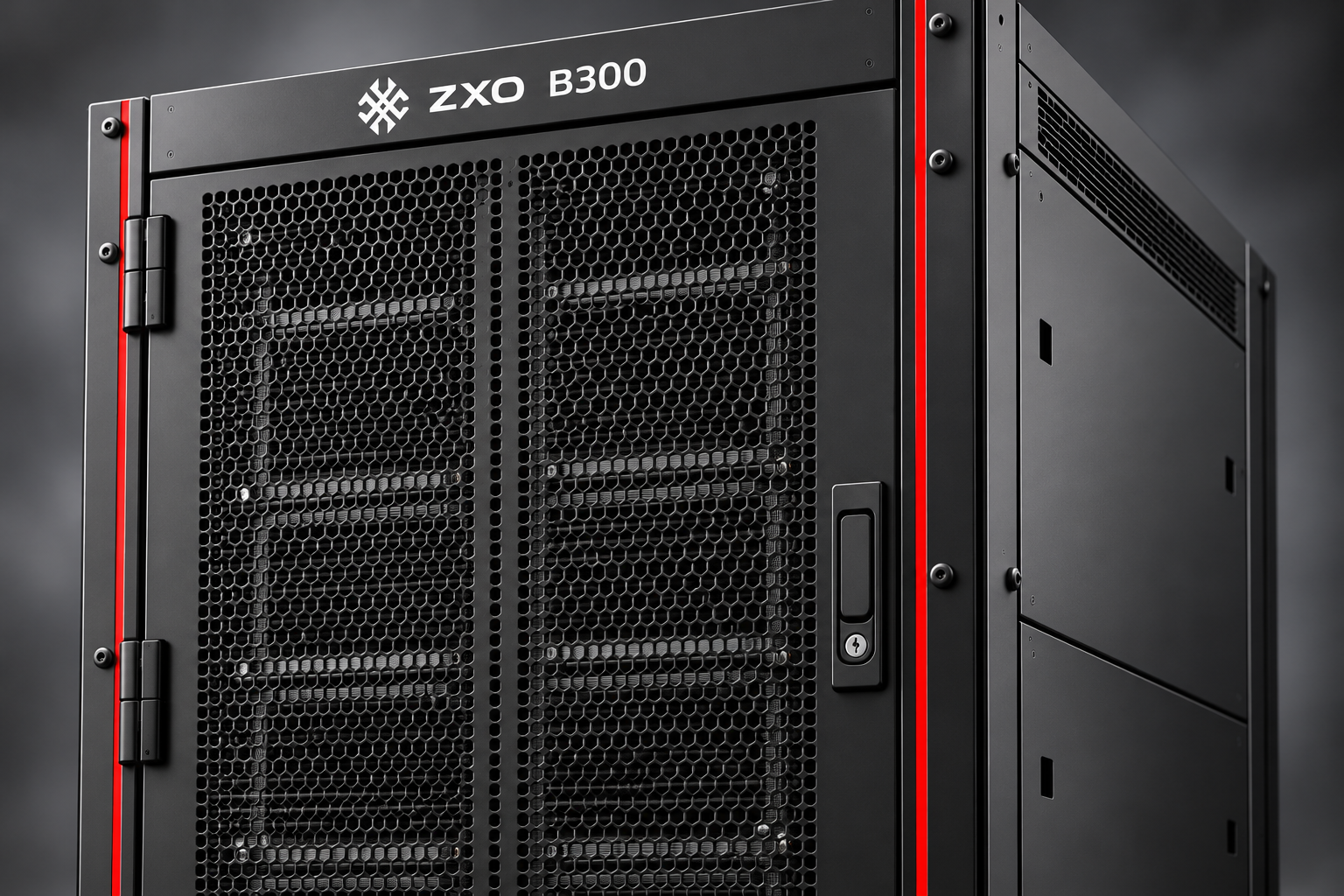
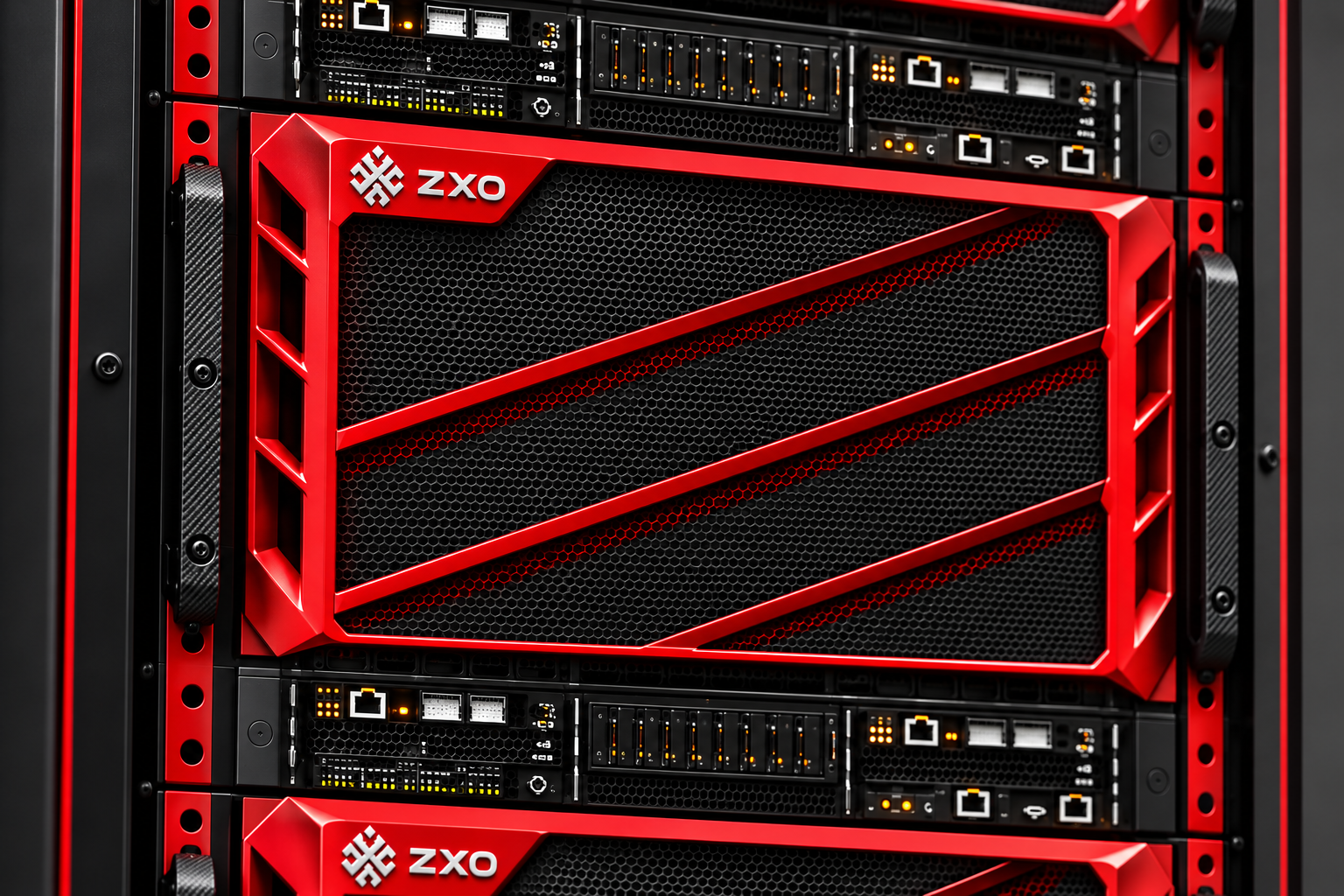
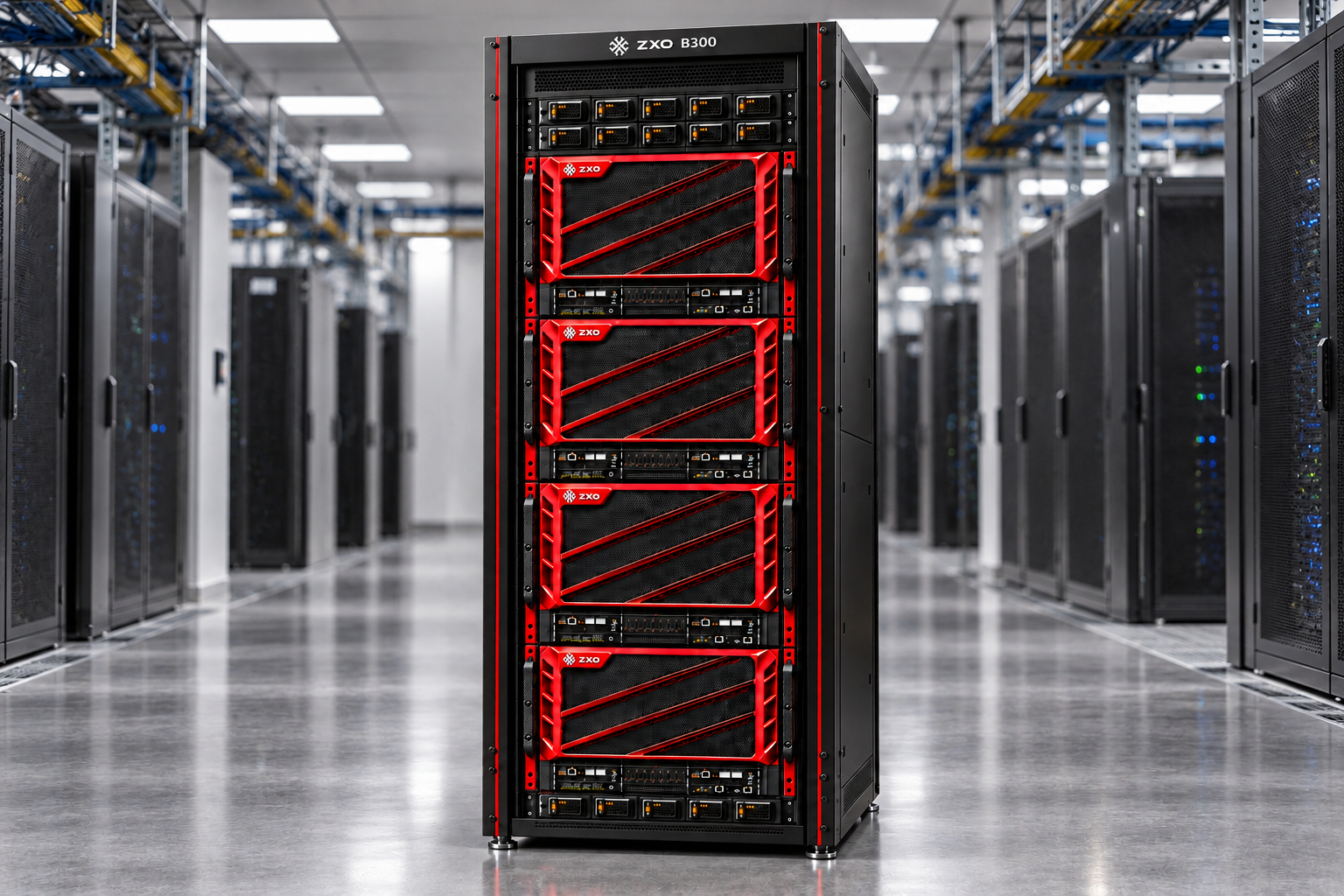
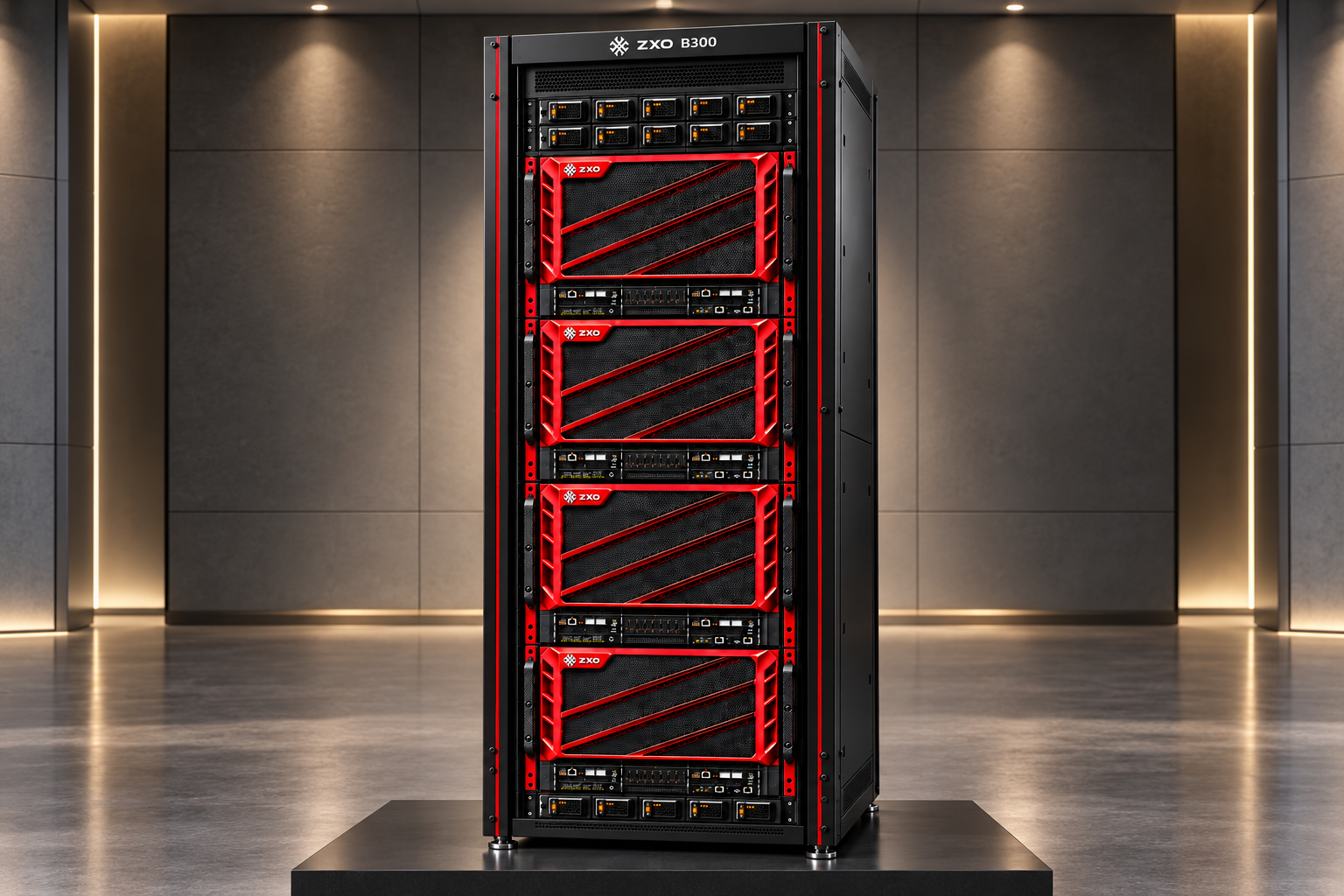
Twelve AI-generated exterior visualizations. Full-resolution originals are available in the image viewer.
06 / START WITH THE REQUIREMENTS
Tell us about your applications, rack density, networking and installation site. We’ll start with the requirements and help define the next steps.